In luxury residential construction, cost overruns are rarely caused by extravagance alone. More often, they emerge from timing, specifically, from when decisions are made rather than what is chosen. Procurement, in this context, becomes less about purchasing and more about orchestration. It is the discipline of aligning design intent, technical resolution, fabrication timelines, and site readiness into a coherent sequence. When this sequence is disturbed, even the most refined project can begin to feel hurried, fragmented, and unnecessarily expensive.
High-end homes operate on a different temporal logic than standard construction. Materials are not simply sourced; they are quarried, fabricated, finished, tested, and transported. Systems are not merely installed; they are coordinated across architecture, structure, services, and interiors. Each layer introduces dependencies, and procurement sits at the intersection of all of them. The earlier this intersection is understood, the calmer the construction process becomes.
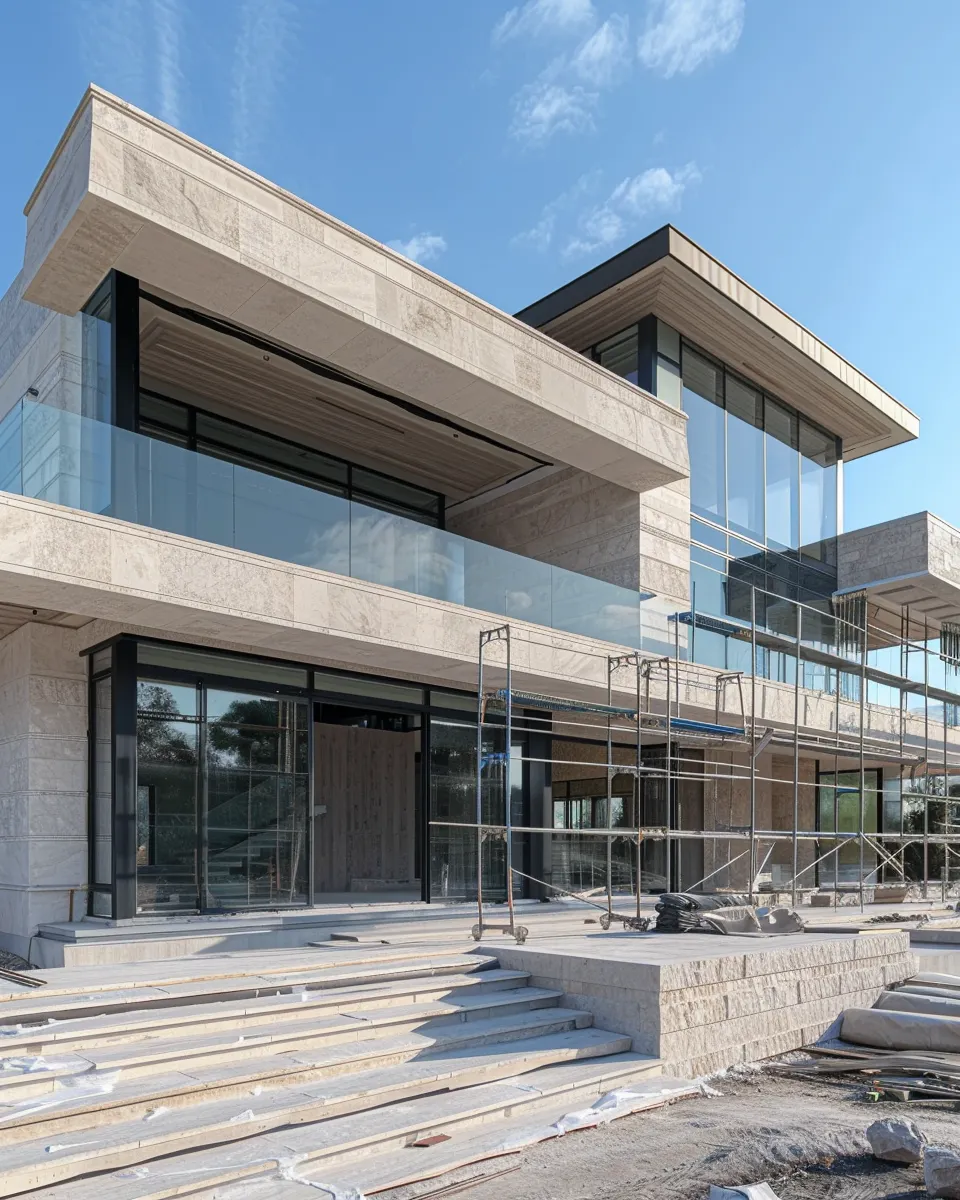
A useful way to understand procurement in luxury homes is to divide decisions into two broad categories: long-lead commitments and adaptive selections. Long-lead items are those whose delay directly threatens schedule continuity, like natural stone, custom metalwork, façade systems, specialised glazing, imported lighting, bespoke joinery, and complex mechanical equipment. These elements require detailed shop drawings, mock-ups, approvals, and fabrication windows that cannot be compressed without consequence. Waiting too long to finalise them does not simply delay delivery; it forces rushed substitutions, compromised detailing, or idle labour on site.
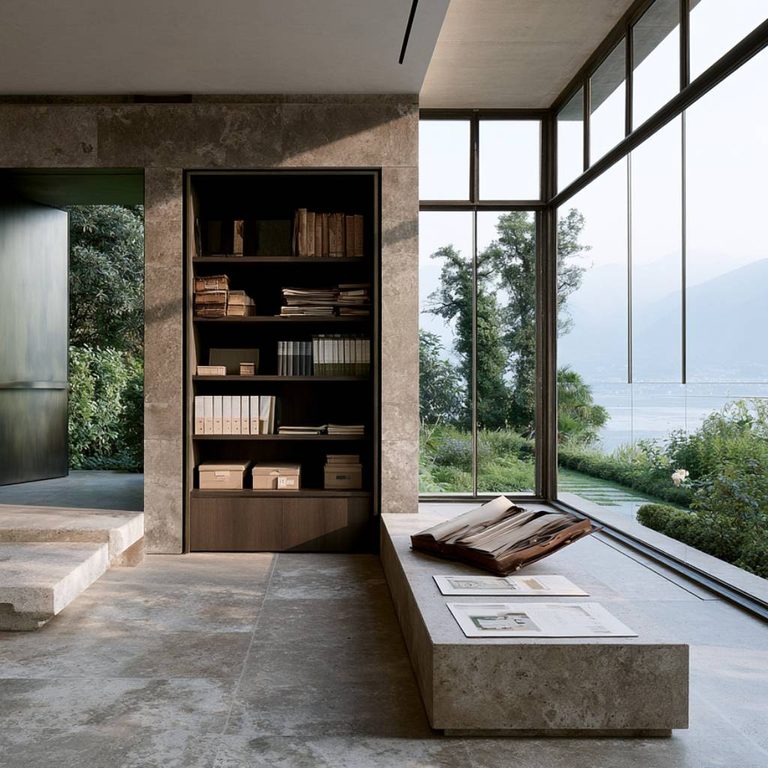
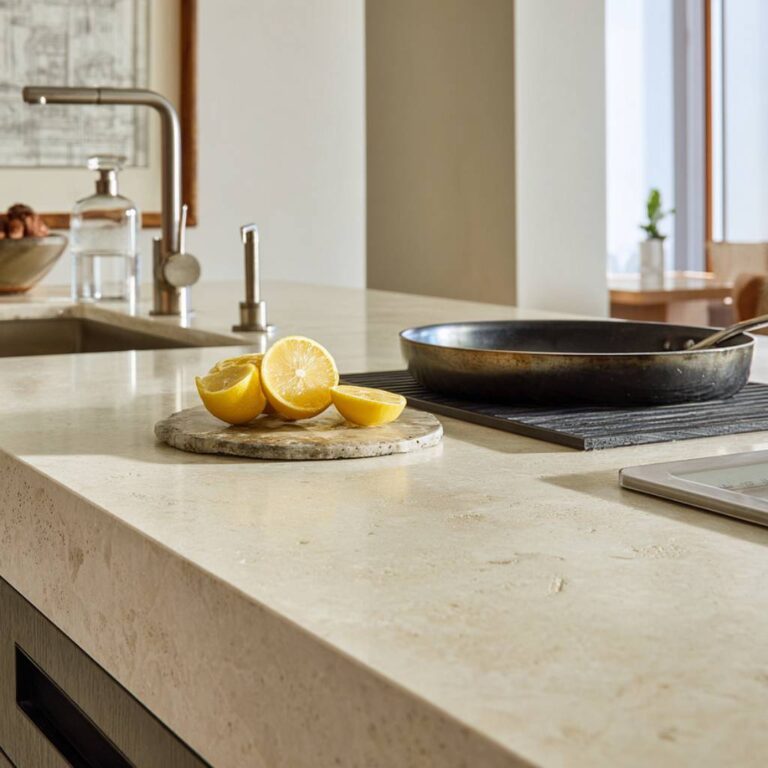
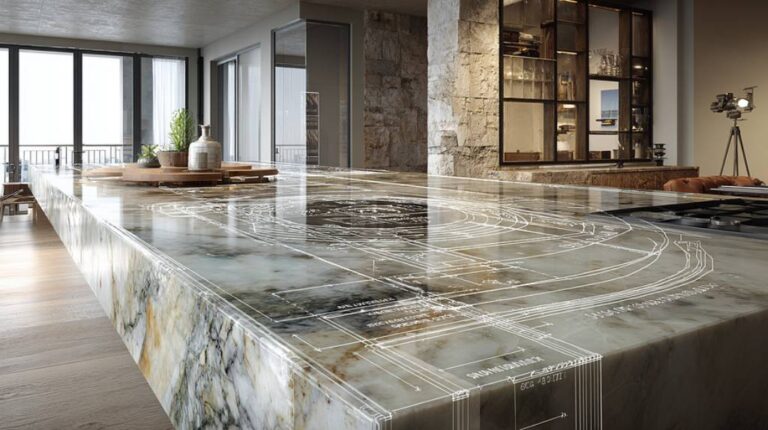
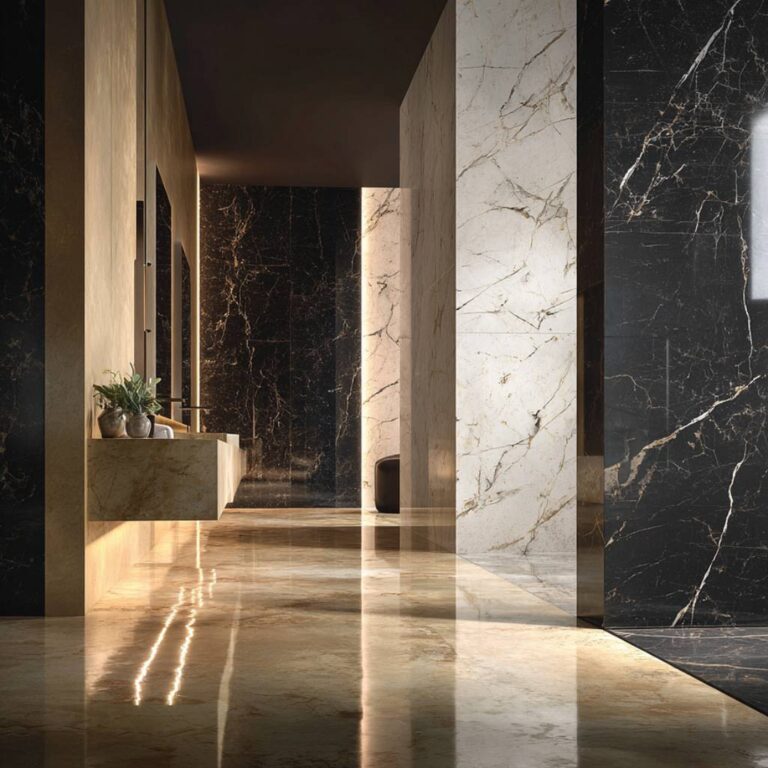
Natural stone is perhaps the clearest example of this logic. In high-end homes, stone is rarely a surface decision made at the end of design. It influences structural allowances, slab thicknesses, edge conditions, waterproofing interfaces, and installation sequencing. Quarry selection, block approval, cutting patterns, and finishing techniques all demand time. If stone is treated as a late aesthetic choice, the project inherits avoidable risk, mismatched batches, dimensional conflicts, or emergency air freight that silently inflates cost. When locked early, however, stone stabilises multiple downstream decisions, transforming uncertainty into predictability.
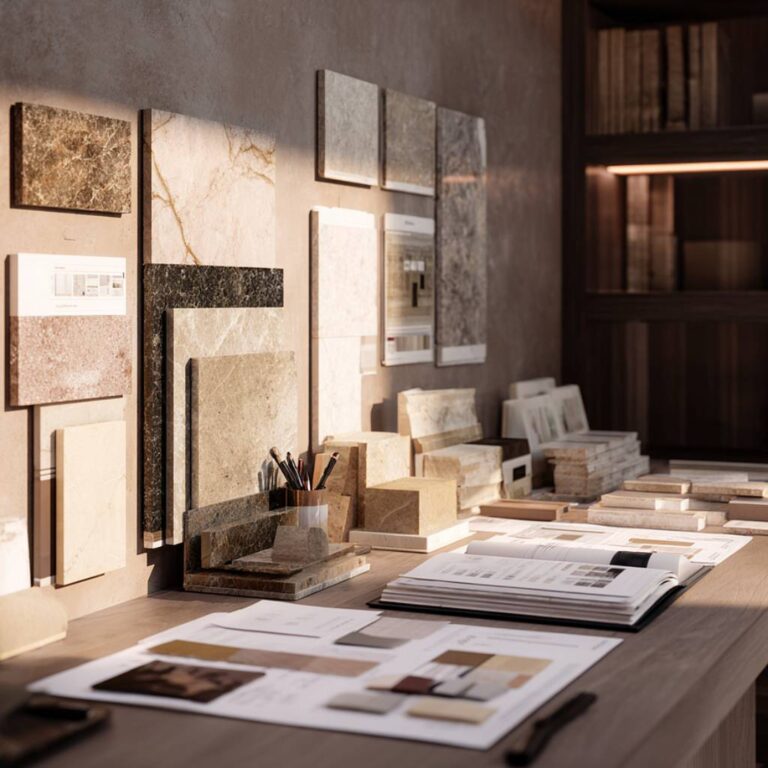
Closely tied to long-lead procurement is the culture of mock-ups and samples. In luxury construction, drawings alone are insufficient to guarantee the outcome. Physical verification becomes essential, stone junctions are tested for alignment, metal finishes are reviewed under daylight, façade assemblies are evaluated for water performance, and joinery prototypes are assessed for proportion and tactility. These exercises may appear time-consuming at first glance, yet they are fundamentally preventive. A week spent validating a detail before fabrication can save months of rework after installation. Procurement, therefore, is not merely acquisition; it is risk reduction through early evidence.
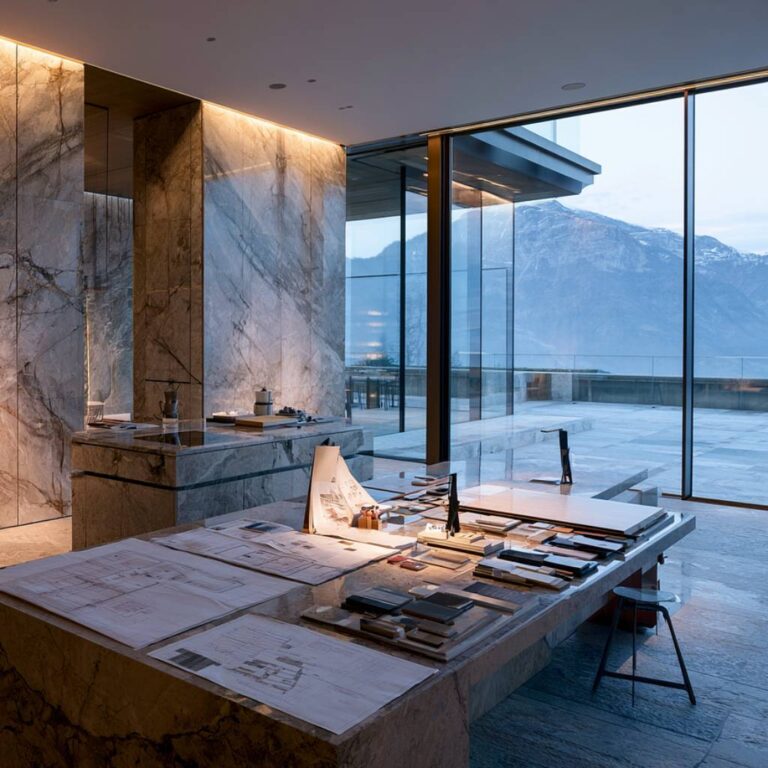
Equally critical are shop drawings, the translation layer between architectural vision and manufacturable reality. In high-end homes, shop drawings often reveal constraints invisible at the design stage, tolerances between materials, fixing strategies within concealed cavities, coordination with services routing, or structural clearances affecting finish thickness. Approving these drawings early allows procurement to proceed with confidence. Delayed approvals, by contrast, compress fabrication windows and invite hurried decision-making, where precision is replaced by urgency.
Yet not every decision benefits from early finalisation. Some selections must remain intentionally late to preserve flexibility. Loose furniture, decorative lighting layers, soft finishes, and certain landscape elements respond better to spatial experience than to drawings. Allowing these decisions to mature alongside construction enables proportion, colour, and atmosphere to be judged in real conditions. The discipline lies not in deciding everything early, but in deciding the right things early while protecting space for thoughtful evolution elsewhere.
This distinction introduces the deeper principle of procurement strategy: sequencing over speed. Fast procurement is often mistaken for efficient procurement, but in luxury homes the opposite is frequently true. Rushed purchasing disconnects materials from context, leading to compromises that surface later as visual inconsistency, technical failure, or maintenance difficulty. Sequenced procurement, by contrast, respects the rhythm of design resolution, technical coordination, and fabrication readiness. It accepts that certain decisions must precede construction, while others must follow experience.
Another overlooked dimension is logistical intelligence. High-end materials travel across geographies, stone from Italy or Turkey, hardware from Germany, lighting from Belgium, and veneers from Southeast Asia. Each journey introduces customs timelines, climate sensitivities, packaging risks, and storage requirements. Procurement planning must therefore extend beyond selection into transportation, warehousing, and site handling. Without this foresight, materials may arrive too early and deteriorate in storage, or too late and disrupt sequencing. Precision in logistics becomes as important as precision in design.
Cost behaviour in luxury homes is also deeply linked to procurement timing. Early clarity allows competitive fabrication pricing, consolidated shipping, and coordinated installation. Late decisions often trigger premium manufacturing slots, fragmented orders, and expedited freight costs that rarely appear dramatic individually but accumulate quietly across the project. What seems like a design delay gradually transforms into financial escalation. Procurement strategy, in this sense, is one of the most powerful yet invisible tools of cost control.
Beyond economics and scheduling lies the question of craft continuity. Luxury homes depend on artisans, stone cutters, metal fabricators, carpenters, façade specialists, whose work cannot be industrially accelerated. These craftspeople require stable information and adequate time. Early procurement respects their process, allowing refinement rather than improvisation. Late procurement forces compression, where craftsmanship risks becoming assembly. The difference is subtle in drawings but unmistakable in the finished space.
Seen holistically, procurement in high-end homes is less about buying materials and more about protecting intention. It ensures that what was imagined in design survives the pressures of construction. When executed thoughtfully, procurement creates calm and steady site progress, predictable costs, and details resolved before they become problems. When neglected, it produces the opposite: urgency, substitution, and silent compromise.
Perhaps the most important insight is that luxury is inseparable from time. Materials that endure are rarely those chosen quickly. Details that feel effortless are usually the result of early discipline. Procurement, therefore, becomes an architectural act rather than a managerial one. It shapes not only how a home is built, but how long its quality will remain visible.
In the end, the question is not simply what to finalise early or late, but why.
Because in high-end homes, timing is design.