There is a quiet moment in every luxury project when a decision is made with complete confidence and yet, with incomplete understanding. It often begins with a sample.
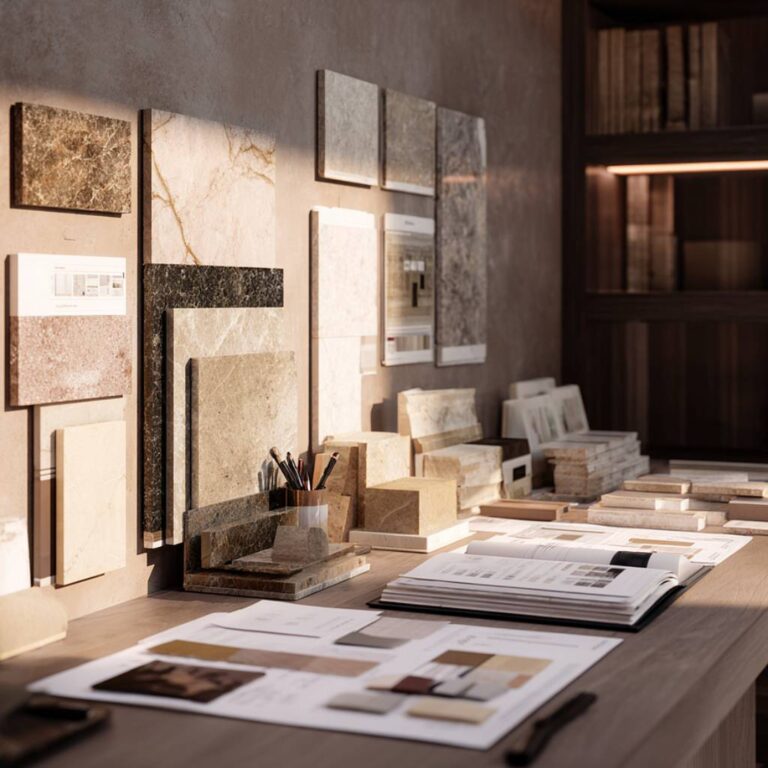
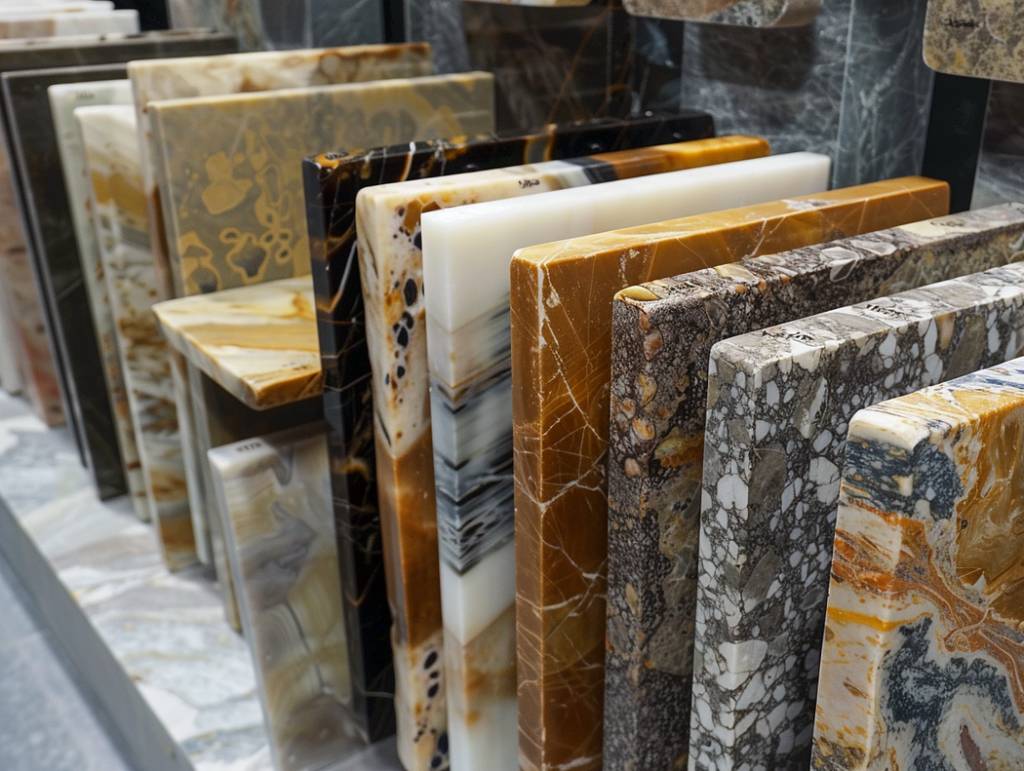
A small piece of stone, neatly cut and presented, is approved across a table. The colour feels right. The texture aligns with intent. The decision appears resolved.
And yet, the material has not been seen.
Natural stone does not behave like a manufactured surface.
It does not repeat.
It does not standardise.
It does not guarantee continuity from sample to slab.
Each block carries its own variation.
Each slab reveals a different composition of vein, tone, and movement.
What is approved in hand is rarely what is installed at scale.
This is where projects begin to diverge, not in design, but in expectation.
In one high-end residence, a marble sample was approved early in the process. It carried a soft, consistent background with subtle veining, precisely the restraint the project required.
Months later, when slabs were viewed, the material told a different story.
The veining was more pronounced. The movement more expressive. The consistency imagined at sample stage did not exist in the available slabs. What followed was not a technical failure. It was a disagreement between expectation and reality.
These moments are often framed as material unpredictability. But they are, more accurately, the absence of a selection protocol.
Because stone, unlike most finishes, cannot be selected passively. It must be interpreted.
In projects that maintain clarity, slab selection is not treated as a visit, it is treated as a process.
The act of viewing slabs becomes an exercise in reading material, not choosing from it.
Full slabs are compared side by side, not as individual pieces, but as part of a larger composition. Vein direction is studied in relation to how the material will be cut and placed. Background tone is assessed across multiple slabs to understand variation, not avoid it.
Decisions are not made on what looks best in isolation, but on what works collectively.
This is where documentation becomes essential. Not as record-keeping, but as alignment.
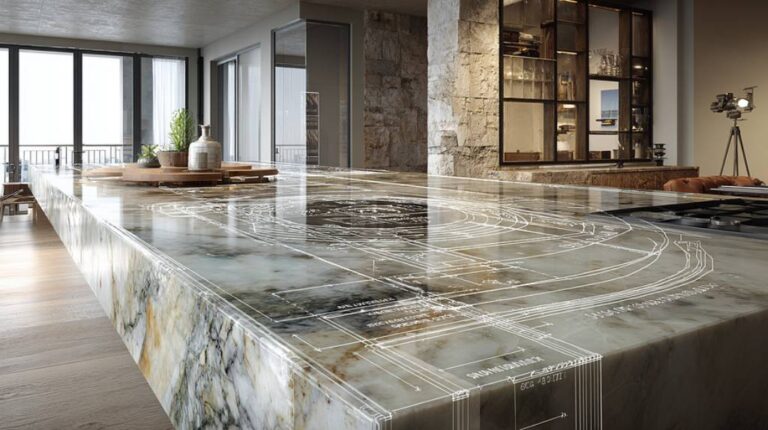
Each selected slab is identified, photographed, and labelled. The decision is no longer abstract; it is tied to a specific piece of material. That selection is then mapped to the project itself, to rooms, surfaces, and orientations.
What was once a visual preference becomes a defined system.
Without this, the project relies on interpretation.
Fabricators read intent differently.
Installers adapt to what arrives.
Clients respond to what they see in the moment.
And slowly, the project begins to drift.
At its core, the difference between controlled and reactive outcomes lies in a few underlying disciplines:
· Whether the intent of the material; its background, its veining, its character, was clearly defined beyond a sample.
· Whether variation was understood and accepted, rather than assumed away.
· Whether the exact slabs selected were documented and tracked.
· Whether those slabs were tied to a layout, rather than left to be resolved on site.
· Whether approval was attached to the material itself and not just to a representation of it.
These are not additional steps. They are the structure that prevents dispute.
Because once stone is cut, installed, and fixed into a space, it cannot be negotiated.
Only accepted.
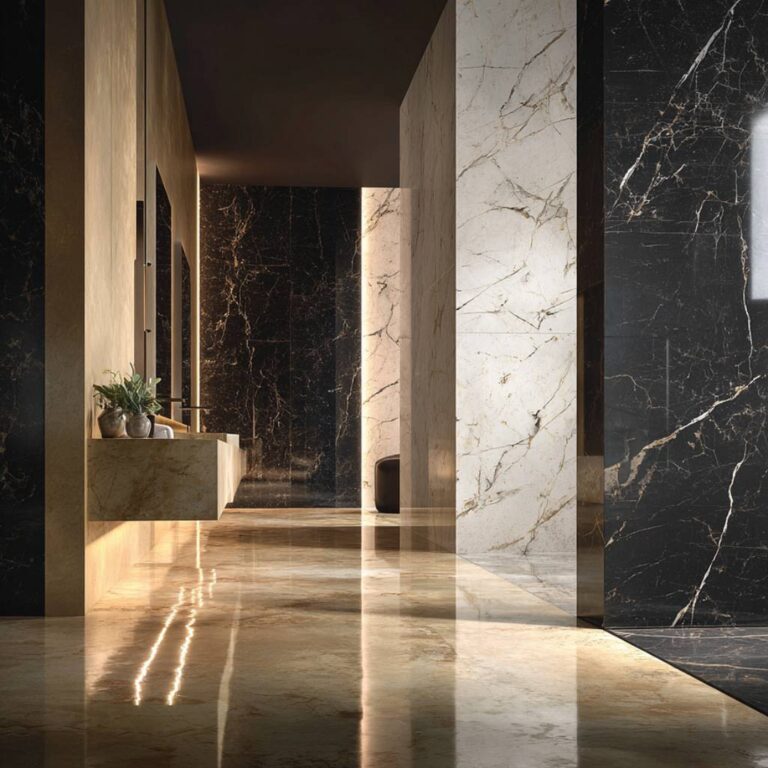
Luxury homes often aspire to a certain visual calm, a sense of continuity, restraint, and control. But that calm is not a property of the material.
It is a result of decisions made with precision.
A sample suggests what a material could be.
A slab defines what it will be.
And the space between those two is where most projects either hold their intent or lose it.