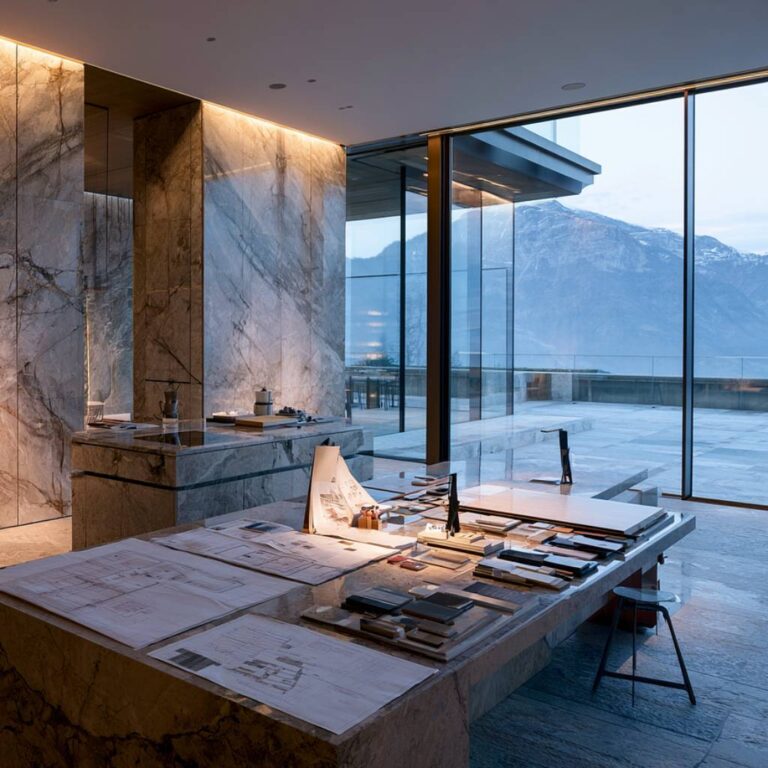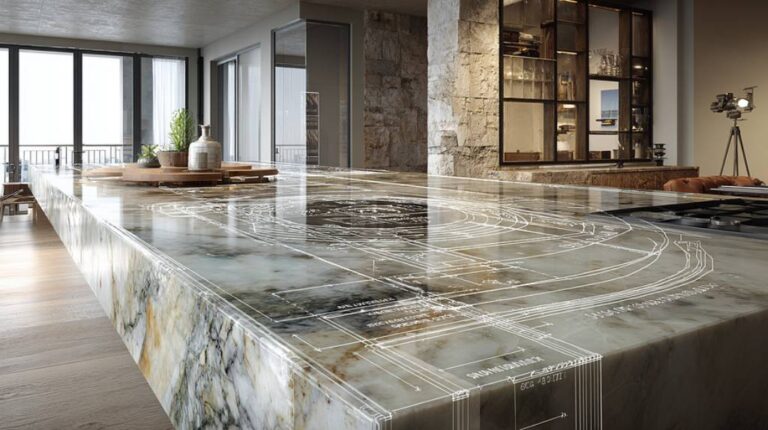
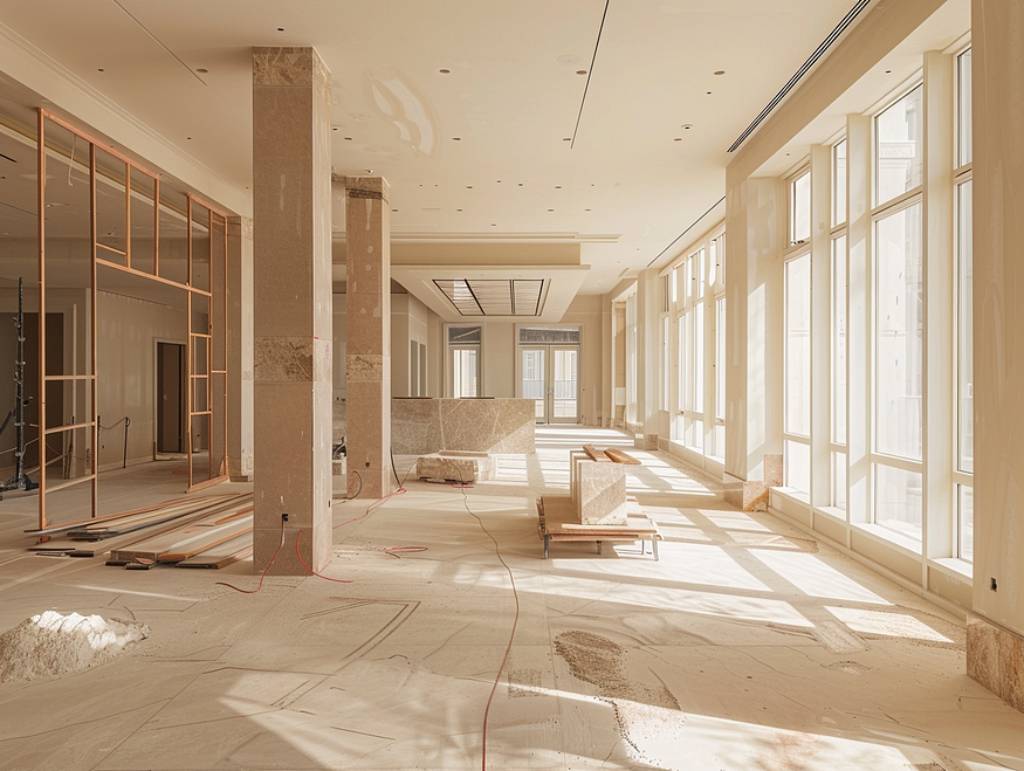
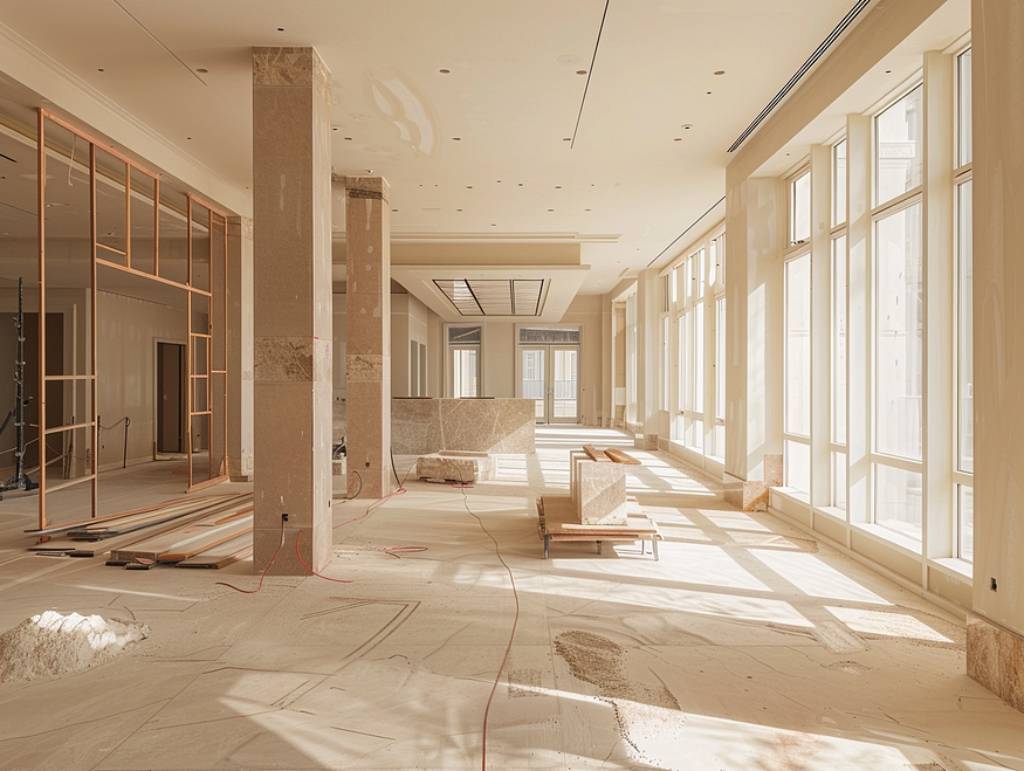
In luxury residential architecture, the visible surface often receives the greatest attention in its color, veining, finish, and craftsmanship. Yet, the true success of natural stone installations is determined long before the first slab is laid. Most failures originate beneath the surface, where unseen conditions such as uneven substrates, residual moisture, and structural deflection silently compromise performance. Understanding and verifying substrate readiness is not a technical formality; it is a strategic necessity that safeguards both design intent and long-term durability.
Why Failures Begin Below the Surface
Natural stone is inherently rigid and unforgiving. Unlike flexible finishes, it cannot accommodate inconsistencies in the substrate without manifesting visible defects. Even minor deviations can lead to significant issues:
- Unevenness → Lippage: Variations in substrate flatness result in misaligned stone edges, disrupting visual continuity and creating trip hazards.
- Moisture → Staining & Efflorescence: Excess moisture migrates through stone, carrying salts that crystallize on the surface or cause discoloration.
- Deflection → Cracking: Structural movement or insufficient stiffness leads to stress fractures in rigid stone assemblies.
These failures are often misattributed to material quality or installation workmanship, when in reality they stem from inadequate pre-installation verification.
The Blueprint Approach: Site & Installation Audit
To eliminate uncertainty, a structured Site & Installation Audit should precede every natural stone installation. This proactive framework ensures that substrates meet the stringent performance criteria required for luxury applications.
1. Flatness Verification
Precision in stone installation begins with a perfectly prepared base. Substrates must comply with tight flatness tolerances appropriate for large-format stone. Laser levelling and straightedge testing should be conducted across all installation zones, with corrective levelling completed prior to setting.
2. Moisture Testing Plan
Moisture is one of the most underestimated risks in stone construction. A formal testing protocol such as calcium chloride or relative humidity testing should be implemented to confirm that moisture levels are within acceptable limits. Additionally, curing schedules for concrete or screeds must be strictly observed to prevent latent moisture issues.
3. Structural Deflection Assessment
Stone assemblies require substrates with minimal movement. Structural engineers should verify that floor systems meet deflection criteria suitable for natural stone (commonly L/720 or better). This is especially critical for elevated slabs, staircases, and cantilevered elements.
4. Compatibility of Installation Materials
Adhesives, membranes, and sealants must be compatible with both the stone type and substrate. The selection of appropriate thin-set mortars, crack isolation membranes, and waterproofing systems ensures a cohesive and resilient installation.
5. Curing and Environmental Conditions
Ambient temperature, humidity, and curing durations significantly impact installation success. Controlled site conditions and adherence to manufacturer guidelines are essential to achieve optimal bonding and performance.
6. Pre-Installation Mock-ups
Mock-ups serve as a final validation step, allowing stakeholders to review joint alignment, surface finish, and overall quality before full-scale installation begins. They also provide an opportunity to test installation methodologies under real site conditions.
The Cost of Skipping Readiness Checks
In ultra-luxury homes, remediation is not only expensive but also disruptive and reputationally damaging. Replacing cracked stone, correcting lippage, or addressing moisture-related staining can delay project timelines and erode client confidence. By contrast, investing time in substrate readiness yields exponential returns through reduced risk, enhanced longevity, and flawless execution.
A Checklist for Decision-Makers
Before approving natural stone installation, project teams should confirm:
- Substrate flatness meets specified tolerances.
- Moisture levels are tested and within acceptable limits.
- Structural deflection criteria are satisfied.
- Installation materials are compatible and approved.
- Environmental conditions support proper curing.
- Mock-ups are reviewed and signed off.
This checklist transforms substrate preparation from an overlooked task into a decisive quality control milestone.
Conclusion: Precision Begins Before Installation
Luxury is defined by permanence. The enduring beauty of natural stone depends not only on its aesthetic appeal but on the integrity of the foundation beneath it. By adopting a rigorous substrate readiness protocol, architects, designers, and builders can ensure that their projects achieve the highest standards of performance and craftsmanship.
In the narrative of luxury construction, what lies beneath is just as important as what is seen. When substrates are prepared with precision and foresight, natural stone fulfills its promise as timeless, resilient, and flawlessly integrated into the architecture it elevates.