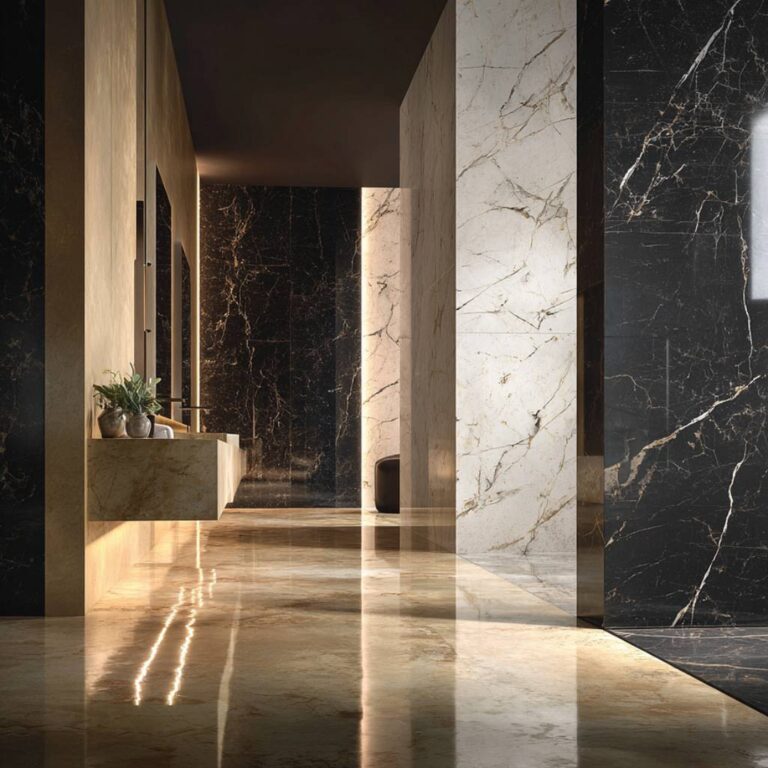
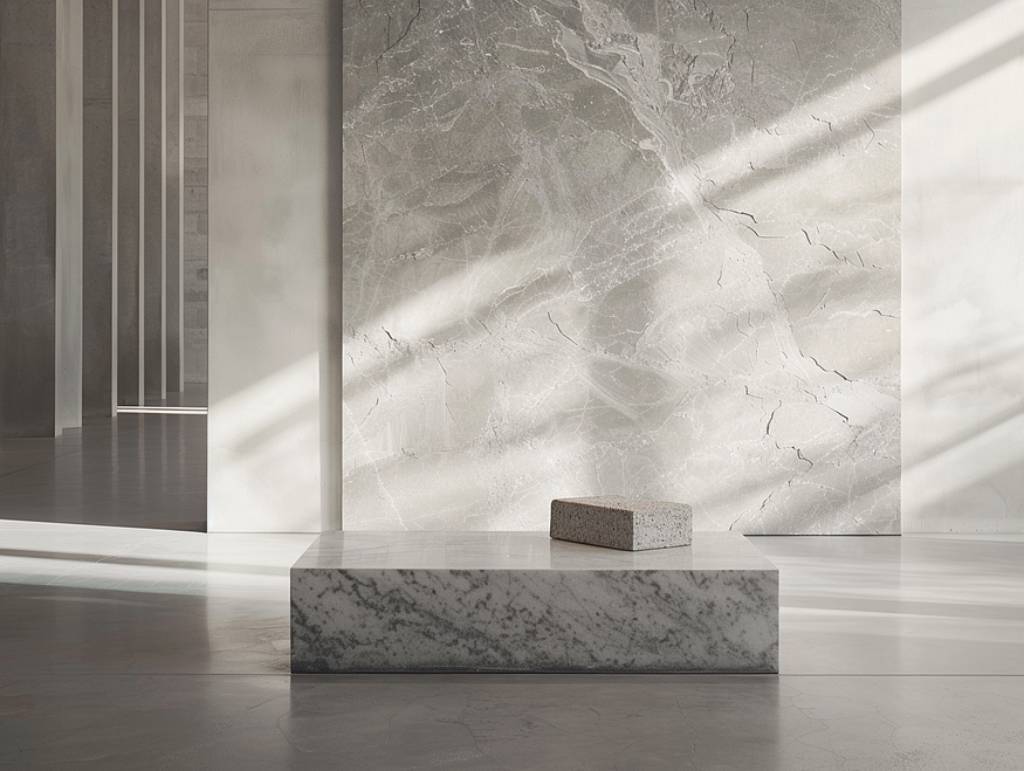
In luxury residential projects, there is a particular kind of misalignment that does not begin as a problem, but slowly becomes one. It emerges not from technical failure or poor execution, but from a subtle gap between what was understood and what was eventually delivered. A sample is approved, the decision feels resolved, and the material; at least in principle, has already been accepted into the architecture of the home. Yet, when the stone finally arrives on site, there is a pause. Something feels unfamiliar. Not incorrect, not unusable, but distinctly different from what had been imagined.
This moment is often attributed to the inherent variability of natural materials. Stone, after all, is not manufactured to repeat. It shifts from block to block, and even within a single slab. Veins intensify, tones drift, and movement reveals itself at a scale that no sample can fully represent. But to describe this as unpredictability is to overlook the deeper issue. The problem is not that stone varies. It is that variation was never defined.
A sample, by its nature, is a reduction. It compresses a complex material into a controlled fragment, offering a suggestion of colour and texture without conveying composition, continuity, or behaviour across a surface. What is approved at this stage is therefore not the material itself, but an interpretation of it. When that interpretation is later confronted with the full expression of the slabs, the gap becomes visible, not as a defect, but as a divergence.
In one such project, a marble sample with a calm, consistent background and restrained veining was approved early in the design process. It aligned precisely with the intended character of the space: quiet, composed, and controlled. Months later, when slabs were sourced, the material revealed a different personality. The veining was more pronounced, the variation more evident, and the overall reading more dynamic than the sample had suggested. The client did not question the quality of the stone. They questioned its fidelity to what had been approved.
At this stage, the project had already progressed beyond flexibility. Procurement had been completed, fabrication timelines were active, and installation was approaching. What followed was not a correction, but a negotiation, between expectation and material reality. Adjustments were considered, layouts were reconsidered, and discussions extended beyond design into justification. The project did not fail, but it began to absorb the consequences of an earlier ambiguity.
What becomes clear in such moments is that the issue is not one of taste, but of structure. The approval existed, but it was not anchored. The intent of the material had not been defined beyond a visual impression. The slabs that would eventually be installed were never tied to the decision. The layout, which would determine how the material is read in space, had not been connected to specific pieces. Each element existed independently, and without a system to link them, the project lost its ability to confirm alignment.
Projects that maintain control approach this differently. They treat selection not as a singular event, but as a sequence of interdependent decisions that move from intent to material to placement. The process begins by articulating what the material is expected to do, not only in terms of colour, but in terms of vein direction, density of movement, and acceptable range of variation. This transforms the discussion from preference into criteria. The material is then engaged at its true scale. Slabs are viewed collectively, compared in relation to one another, and selected as part of a composition rather than as isolated pieces. Each chosen slab is identified and recorded, ensuring that the decision is attached to specific material rather than an abstract reference.
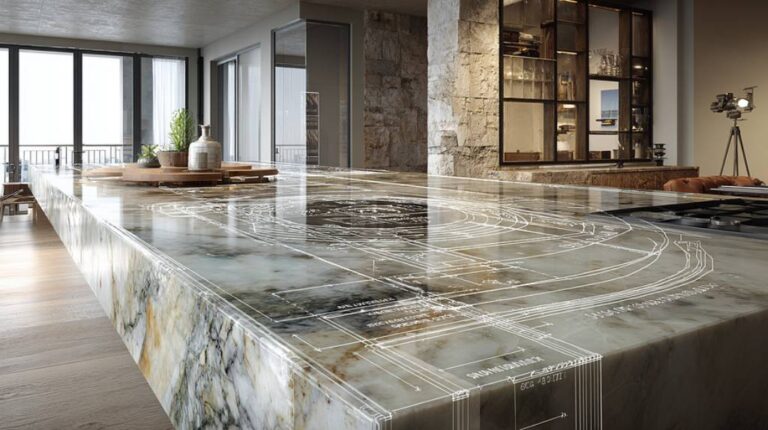
From there, the selection is extended into space. The slabs are mapped to the layout, aligning vein direction, cuts, and adjacencies before fabrication begins. The material is no longer separate from the architecture; it is integrated into it. Finally, the approval is consolidated into a single, traceable reference where intent, material identity, and placement exist together. At this point, the project is no longer dependent on interpretation. It operates on alignment.
This structure does not eliminate variation, nor should it attempt to. Instead, it positions variation within defined boundaries, allowing the material to express itself without compromising the design. When the stone arrives on site, it is not judged against memory or expectation, but against a documented and agreed-upon reality.
Luxury, in this context, is often misunderstood. It is not the absence of difference, but the presence of control. A well-executed space does not rely on materials behaving predictably; it relies on decisions being made with clarity and in sequence. The difference is not visible in isolation, but it becomes evident in the overall coherence of the space.
Ultimately, the distinction between a resolved project and a compromised one is established long before installation begins. It lies in whether the approval is tied to a representation or to the material itself, whether variation is assumed away or defined, and whether the placement of the material is considered early or deferred.
A sample may create confidence, but it cannot guarantee alignment. That alignment emerges only when intent, material, and placement are treated as a single system.
A sample offers a promise. A system ensures it is kept.
And it is within that system that a project retains its integrity: quietly, precisely, and without the need for correction.