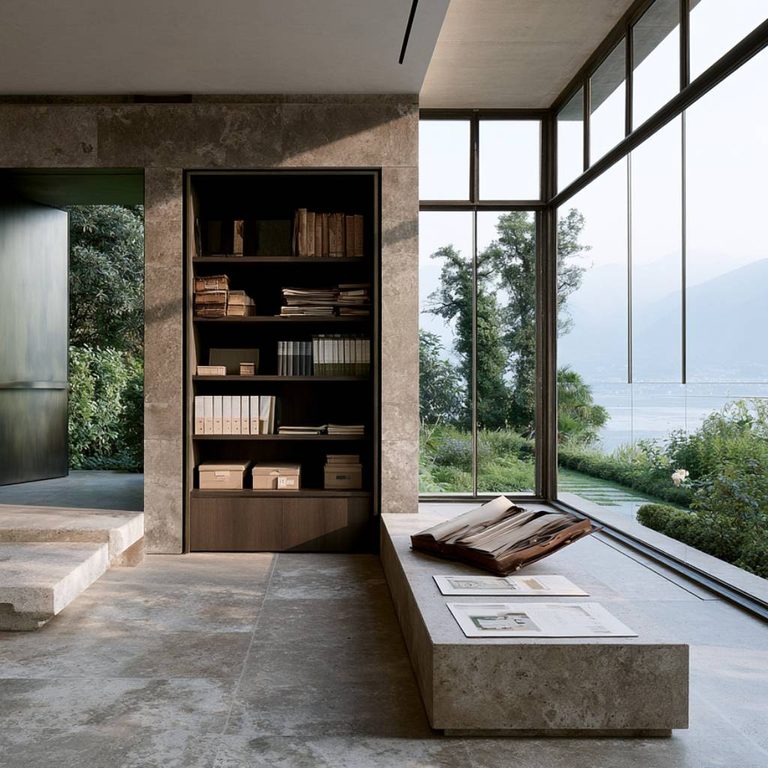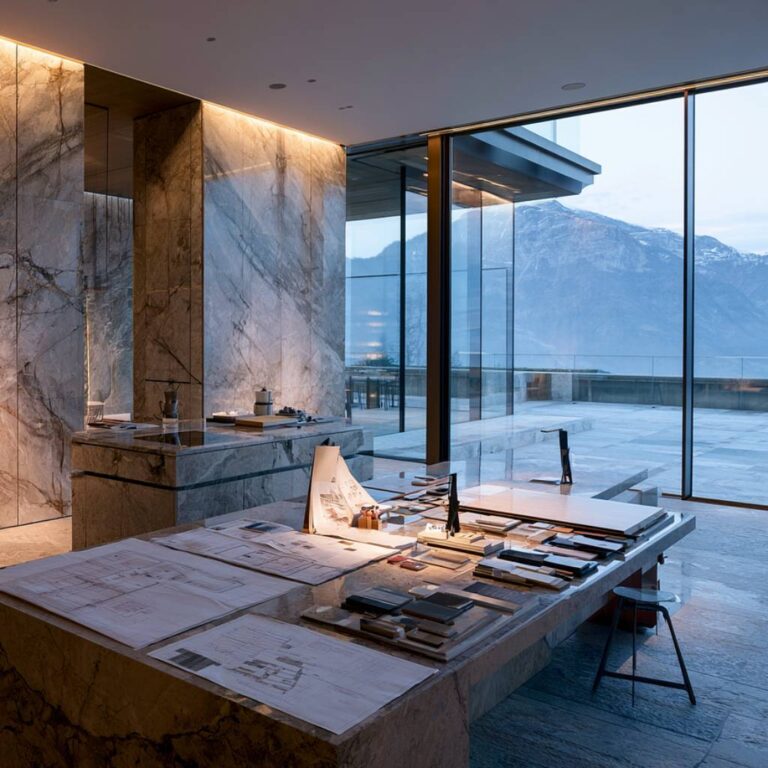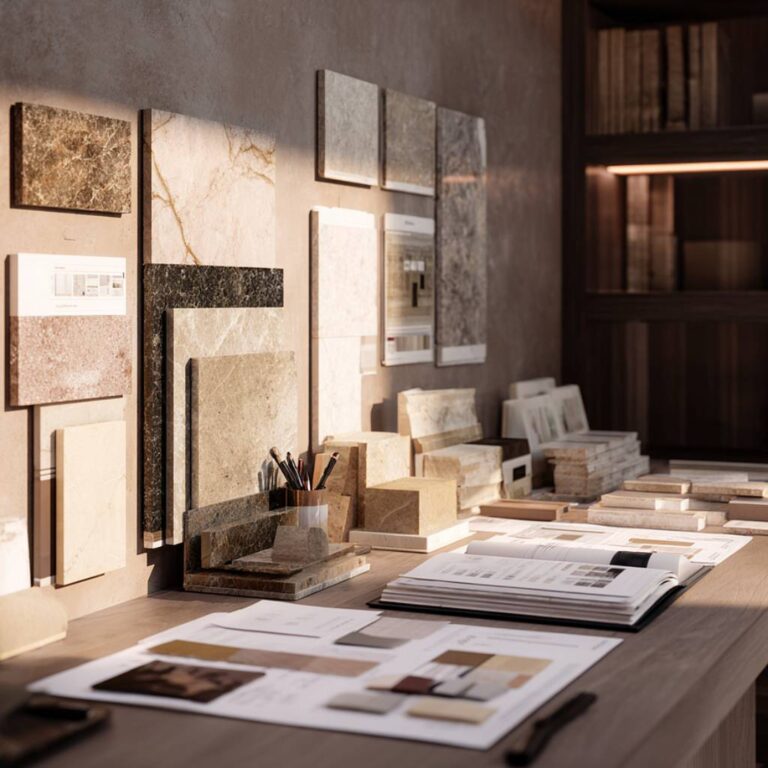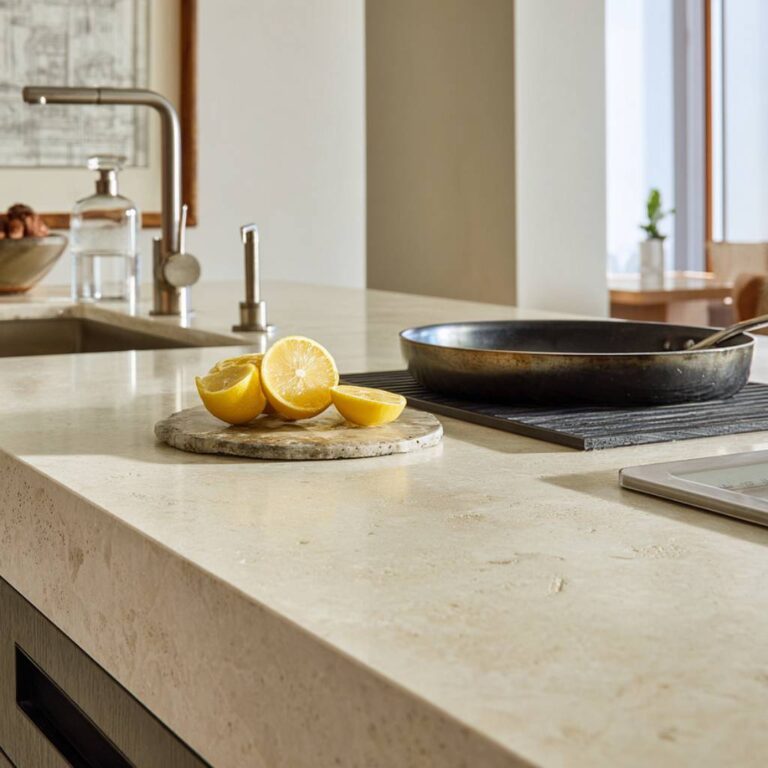
In luxury residential projects, complaints rarely arrive dramatically. They surface quietly, often after handover, embedded in experience rather than documentation. In this case, it was a bathroom entry that felt unexpectedly slippery. Not dangerously so at first, but enough to make the user pause before stepping forward. That pause is where architecture begins to fail, because in well-resolved spaces, movement is instinctive. The body trusts the surface before the mind evaluates it. When that trust is interrupted, even slightly, the experience of the space begins to unravel.
The immediate assumption in such situations is almost always directed at the material. The stone must be too smooth, too polished, or simply the wrong selection. This leads quickly to surface-level solutions like etching, coatings, or even replacement discussions. Yet these responses often treat the symptom rather than the underlying system. Slip is rarely caused by a single factor. It is the result of multiple conditions acting together, often unnoticed during the design phase.
In this instance, the stone itself was not inherently unsuitable. Under controlled testing conditions, it performed within acceptable slip resistance ranges. Laboratory values, measured through DCOF testing, suggested compliance. However, the real environment told a different story. Water was consistently present at the bathroom entry, creating a variable surface condition. Cleaning products introduced a thin residue film over time, subtly altering friction. The chosen finish, while visually refined and aligned with the design intent, offered minimal tactile resistance when wet. Most critically, none of these factors had been considered collectively during selection. The issue was not the stone alone, but the absence of contextual thinking.
This reveals a fundamental gap between testing and lived reality. Slip resistance testing is conducted under defined and controlled conditions, where variables are stabilised and repeatable. Real life operates very differently. Water is uneven, foot traffic is inconsistent, and maintenance practices evolve over time. Residues accumulate, surfaces age, and environmental conditions shift. A material that performs well in a laboratory can behave unpredictably once installed and occupied. When testing is treated as validation rather than as a tool for understanding behaviour, this gap widens.
One of the most overlooked decisions in this process is the choice of finish. Polished stone is often preferred for its clarity, reflectivity, and ability to elevate the perceived luxury of a space. It amplifies light and reveals the depth of the material. However, this visual refinement comes with a tactile trade-off. Under dry conditions, the surface may feel acceptable, even comfortable. Under wet conditions, it can become significantly more hazardous. A honed or textured finish introduces micro-resistance that engages with the foot differently, providing subtle feedback that enhances stability. When finish selection is driven purely by aesthetics, performance becomes secondary, and in transitional spaces such as bathroom entries, that decision becomes immediately evident.
Equally important, yet frequently ignored, is the role of cleaning and maintenance. The performance of a stone surface does not remain fixed after installation. Cleaning agents, particularly those that leave behind films or residues, can gradually reduce slip resistance. What begins as a compliant surface can become increasingly problematic through everyday use. Despite this, cleaning protocols are rarely integrated into the design process. They are treated as operational details, disconnected from material behaviour. This separation creates a gap in accountability, where no single decision appears responsible, yet the overall system underperforms.
To understand slip issues more accurately, the focus must shift from the material itself to the system it operates within. Stone, finish, environmental exposure, and maintenance practices are interdependent. Evaluating them in isolation leads to incomplete conclusions. In this case, the stone was not incorrect, but the system was undefined. There was no clear classification of use during selection, no alignment between finish and wet conditions, no integration of cleaning protocols into performance expectations, and no translation of testing data into real-world scenarios. Each decision, taken individually, appeared reasonable. Together, they resulted in a surface that failed the user experience.
A more robust approach requires embedding lifecycle thinking into the design process from the beginning. Instead of focusing solely on how a material looks, the questions must shift toward how it behaves. How will this surface perform when consistently exposed to water? What types of cleaning agents will be used, and how will they interact with the material? Will residues build up over time, and how will that affect friction? What level of slip resistance is required for this specific condition? These questions are not secondary considerations. They define the long-term success of the design.
Responsibility for these outcomes does not lie with a single party. Slip performance sits at the intersection of design, specification, installation, and maintenance. When these roles operate independently, gaps emerge. When they are aligned, performance becomes predictable. This alignment does not require complexity, but it does require clarity. Clear definition of use, clear specification of finishes, clear coordination between testing and real conditions, and clear communication of maintenance protocols are essential. Without this, even the most premium materials can fail to meet expectations.
What makes this type of failure particularly significant is its subtlety. The bathroom entry did not fail in an obvious or dramatic way. It simply felt wrong. These are the failures that are hardest to diagnose and the most important to resolve. Architecture is experienced through the body, not just through visual perception. A moment of hesitation, a slight discomfort, or a loss of confidence in a surface can undermine the entire spatial experience.
It is easy to attribute such issues to the material itself, but in most cases, the material is only one part of a larger equation. Slip is not a fixed property. It is a condition created through interaction: between the stone, the environment, and the way the space is used over time. A well-designed surface anticipates this interaction. It accounts for water, wear, maintenance, and change. It does not rely solely on laboratory values, but translates those values into lived conditions.
In luxury homes, where expectations are defined not just by appearance but by experience, this distinction becomes critical. Comfort is not only visual. It is physical, immediate, and continuous. Once that is compromised, no level of material quality can fully restore it.