Kitchen countertops are often treated as aesthetic decisions. A slab is selected based on color, pattern, or trend, and once installed, it is expected to perform without compromise. But the reality of a kitchen is far more demanding than its visual calm suggests. It is one of the most aggressive environments in a home, constantly exposed to heat, acids, abrasion, impact, and daily misuse. And when material selection is made without acknowledging this reality, even the most premium stone begins to fail.
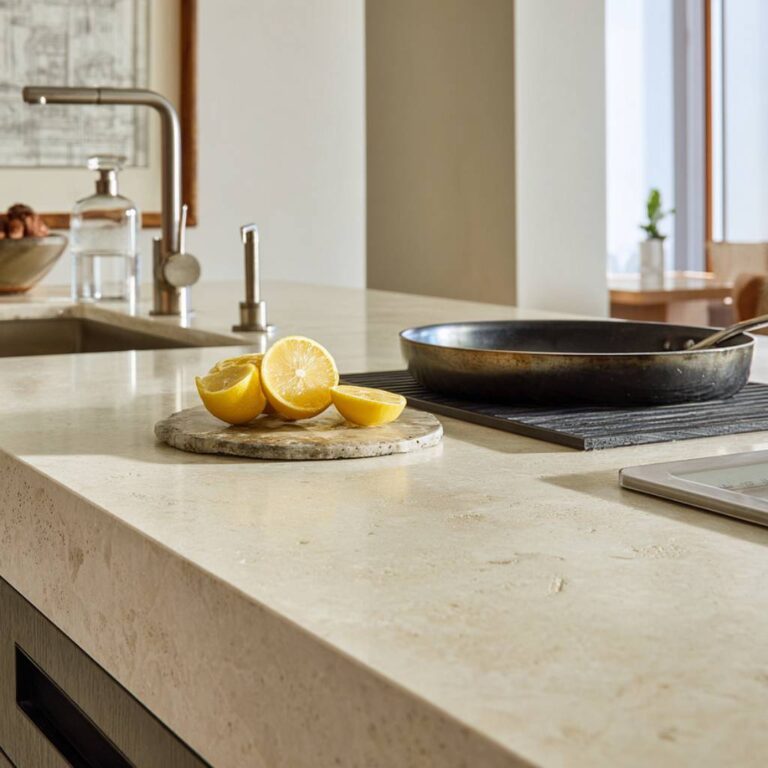
The problem does not lie in the material itself. Granite, quartzite, marble, each has its own strengths and limitations. The issue is that these materials are often selected without aligning them to how the kitchen will actually be used. A countertop is not just a surface; it is a working interface. Hot vessels are placed without warning. Acidic substances like lemon, vinegar, and tomato come into direct contact. Knives scrape, appliances vibrate, and sink cutouts become points of repeated stress. These are not exceptional conditions; they are daily habits. And if the material is not chosen with these behaviours in mind, failure is not a possibility, it is a certainty.
Heat is one of the most underestimated risks. Many stones can tolerate high temperatures in theory, but real conditions are rarely controlled. A hot pan placed directly from the stove creates thermal shock, especially near sink cutouts where the material is already weakened. Over time, this leads to micro-cracking or discoloration that cannot be reversed. Similarly, acids do not always cause immediate visible damage. On marble, for instance, they react slowly, dulling the surface and creating etch marks that only become noticeable under certain lighting. These changes are often mistaken for poor maintenance, when in reality they are a predictable outcome of material behavior.
Impact is another silent factor. The edges of countertops, particularly around sink areas, are vulnerable to chipping. This is not because the stone is weak, but because the geometry concentrates stress. A small impact in the wrong location can create visible damage, even on otherwise durable materials. And once chipped, repair is rarely invisible. This is where the idea of repairability becomes critical. Some materials can be restored or blended back with relative ease, while others carry the damage permanently.
What makes these failures more frustrating is that they are often preventable. The key is to move from selection based on appearance to selection based on context. This means understanding not just what the material looks like, but how it behaves under specific conditions. Granite and quartzite, for example, are generally more resistant to heat and scratching, making them suitable for high-use kitchens. Some harder marbles can perform adequately if their limitations are acknowledged and managed. But even the most suitable material will fail if it is paired with the wrong detailing or used without guidance.
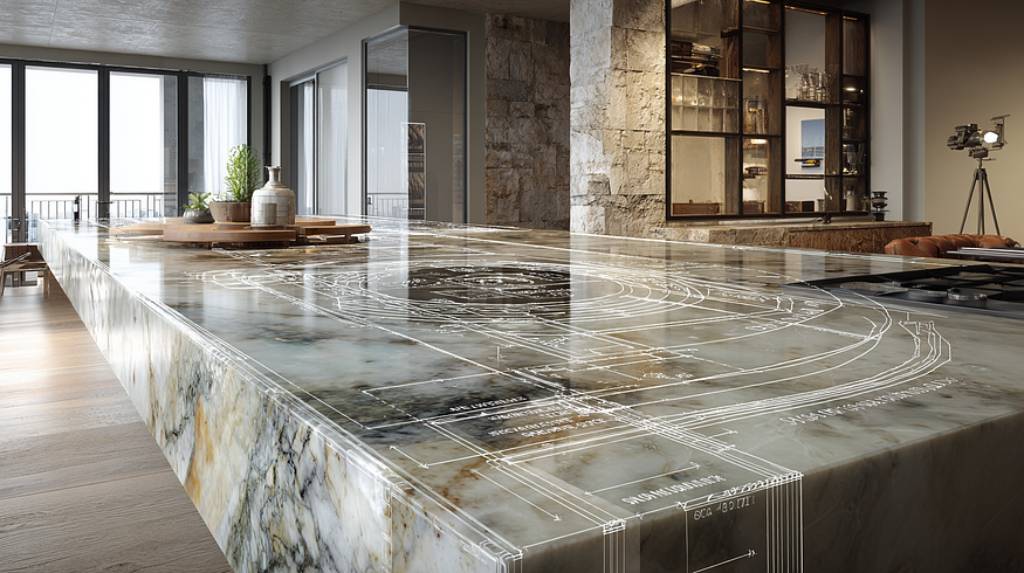
This is where design must extend beyond specification into system thinking. A countertop is not an isolated element but it is part of a larger assembly. The way the sink cutout is detailed, the support provided underneath, the edge profile chosen, and the sealing strategy all influence performance. A poorly detailed sink cutout, for instance, becomes a point of stress concentration, increasing the likelihood of cracks or chips. Similarly, sealing is often treated as a one-time process, when in reality it requires maintenance to remain effective.
Perhaps the most overlooked aspect is user behaviour. Even the best-designed system cannot perform if it is used incorrectly. This is why embedding a clear maintenance and usage guideline is not optional but it is essential. Users need to understand what the surface can and cannot handle. Simple practices, such as using trivets for hot vessels, avoiding direct contact with strong acids, and cleaning with appropriate products, can significantly extend the life of the material. Without this knowledge, users unintentionally become the cause of damage.
From a project perspective, this also ties into risk management. Countertop failures are among the most common reasons for post-installation complaints. They are visible, they affect daily use, and they are often expensive to rectify. Yet, the risk is rarely mapped during the design phase. A structured approach of evaluating heat exposure, chemical exposure, impact zones, and repairability, can reduce this risk significantly. It shifts the conversation from “what looks good” to “what will last.”
In the end, a successful countertop is not the one that looks perfect on day one, but the one that continues to perform over time. That performance is not accidental. It is the result of decisions that align material, detailing, and user behaviour into a coherent system. When these elements are considered together, the countertop becomes resilient. When they are not, even the most expensive surface becomes a liability.
Because in a kitchen, design is not tested by how it looks, but by how it survives daily life.