Luxury homes are often judged on the day they are photographed. The stone gleams under carefully composed lighting, the timber is flawless, the brass has not yet begun to patinate, and every surface reflects the precision of recent construction. Yet architecture is not designed for photographs. It is designed for decades of occupation. The true measure of a luxury residence is not how it performs at handover, but how it performs ten years later.
Visit enough homes several years after completion and a pattern begins to emerge. Some appear almost untouched by time. Their stone remains crisp, joints remain aligned, timber ages gracefully, and maintenance feels routine rather than reactive. Others tell a different story. Staining spreads across marble floors, cracked sealants appear at junctions, replacement tiles fail to match original batches, and maintenance teams spend more time solving problems than preserving quality.
The difference is rarely explained by budget alone. More often, it reflects an invisible decision made long before the homeowner received the keys. One project viewed handover as the end of construction. The other treated handover as the beginning of the building’s operational life.
Luxury construction invests enormous effort in design development, procurement and execution, yet surprisingly little attention is given to the information that accompanies the completed home. Drawings are archived, suppliers move on, contractors demobilise and the project team dissolves. The building, however, must continue performing for decades without the people who built it. What remains is documentation or the absence of it.
The best-performing homes inherit far more than beautifully installed materials. They inherit knowledge. Every significant finish is accompanied by clear information explaining what it is, how it was installed, how it should be maintained, what products are compatible with it, and how future repairs should be approached. The building becomes understandable rather than mysterious.
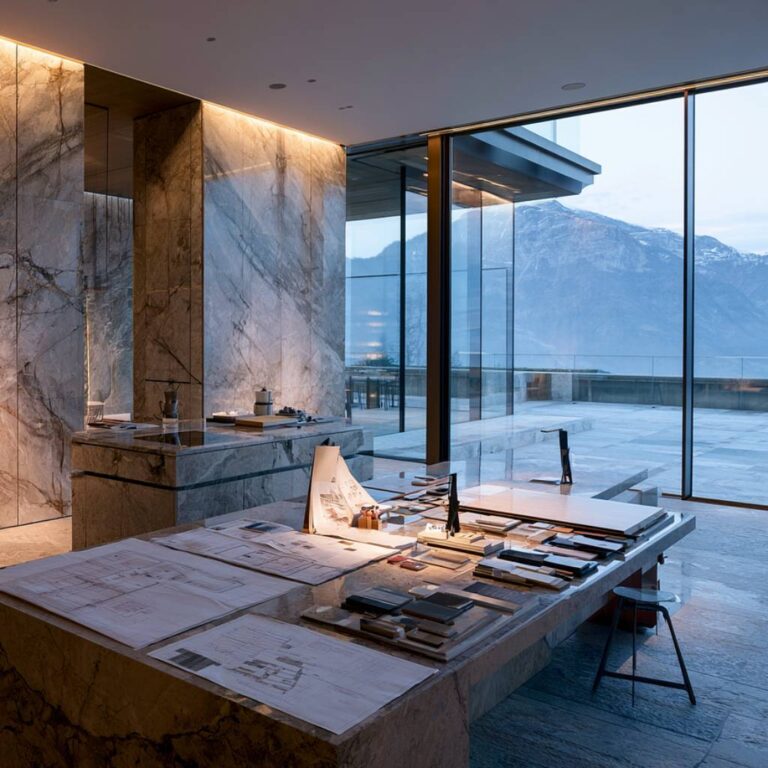
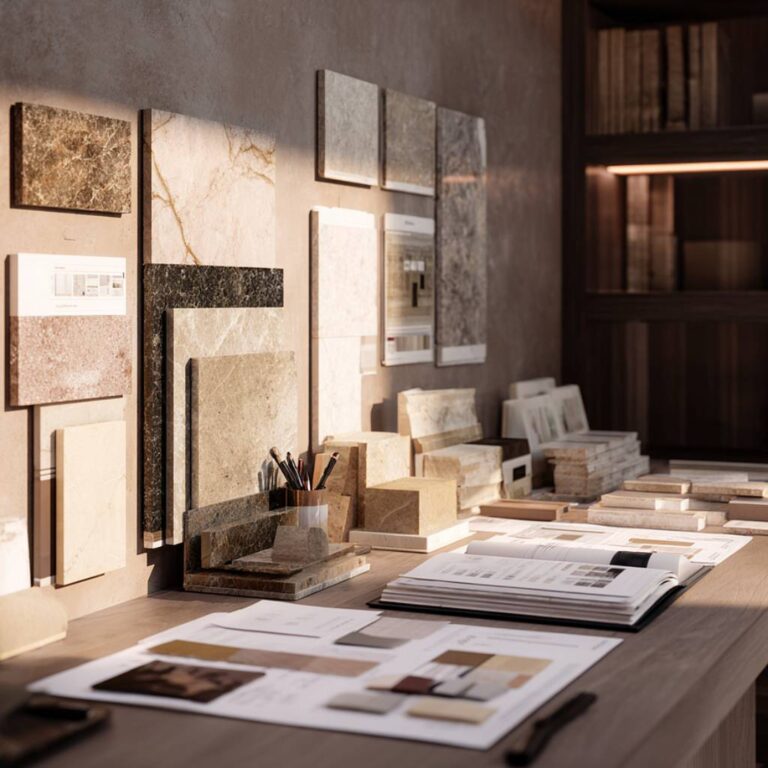
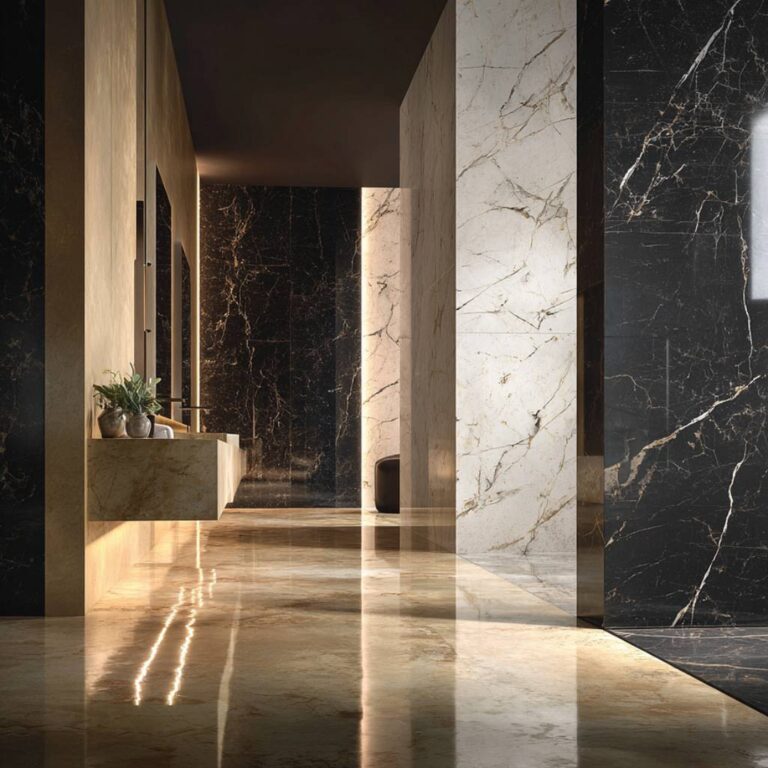
Natural stone illustrates this principle particularly well. During construction, enormous attention is devoted to selecting slabs, approving bookmatches, refining edge profiles and coordinating fabrication. Once installation is complete, much of that information quietly disappears. Years later, when a homeowner requires an additional slab or a damaged surface must be replaced, no one remembers the original quarry, the slab batch, the finish specification or the approved fabrication drawings. The project is forced to start again, often producing repairs that are visibly different from the original work.
A comprehensive handover package prevents exactly this situation. It records the geological classification of the material, quarry source, approved slab layouts, installation methodology, adhesive systems, sealers used, maintenance schedules and recommended cleaning products. What appears to be administrative paperwork becomes an essential part of preserving architectural quality.
The same principle extends far beyond stone. Timber flooring should include moisture limits, refinishing recommendations and approved repair procedures. Metal finishes require cleaning protocols that preserve protective coatings. Large-format porcelain systems need replacement references and installation details. Waterproofing warranties must identify concealed inspection points. Mechanical equipment should include commissioning records, service intervals and expected operating performance. Every system within the house benefits from documentation that allows future decisions to remain consistent with the original design intent.
Perhaps the most overlooked component of handover is the recording of invisible interfaces. Luxury homes increasingly depend on highly coordinated assemblies where multiple systems work together. A concealed shower niche may rely on waterproofing membranes, adhesives, stone panels, sealants and movement joints performing as one integrated system. Years later, replacing only the visible finish without understanding the concealed assembly often introduces failures that never existed in the original construction.
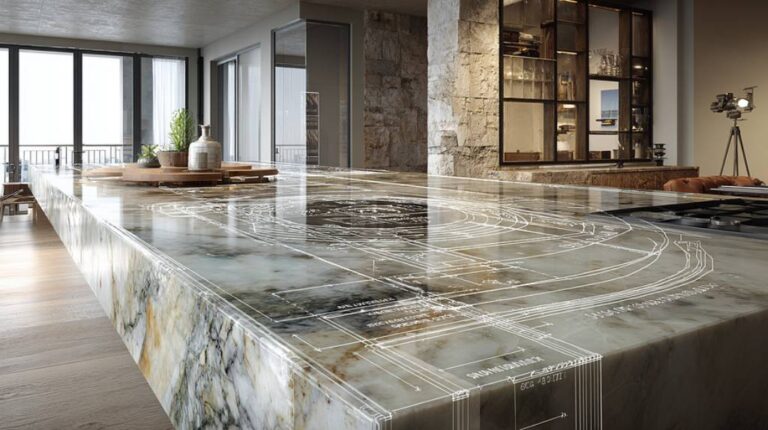
This is why the most successful projects document assemblies rather than individual products. Instead of recording only which marble was selected, they explain how that marble interacts with substrates, fixings, waterproofing, heating systems and adjacent finishes. Maintenance becomes informed rather than experimental.
Leading architectural practices are beginning to recognise that lifecycle performance deserves the same level of design attention as aesthetics. Maintenance manuals are no longer generic documents assembled during the final weeks of construction. They are developed throughout the project, evolving alongside design decisions. Every material approval simultaneously becomes a maintenance decision. Every installation detail also defines a future repair strategy.
This shift fundamentally changes how luxury projects are managed. Instead of asking whether a material can be installed successfully, project teams ask whether it can be maintained successfully for the next thirty years. Instead of specifying products in isolation, they specify systems that remain understandable throughout the building’s operational life.
Facility managers have long understood this philosophy in commercial buildings, where documentation directly affects operational efficiency and lifecycle costs. Luxury residences deserve the same discipline. Increasingly complex homes contain advanced building services, integrated lighting controls, concealed drainage systems, engineered stone assemblies and sophisticated environmental technologies. Operating these homes without comprehensive documentation is equivalent to owning a highly engineered machine without its operating manual.
There is also a financial argument. The cost of preparing a rigorous handover package is negligible compared with the expense of unnecessary investigative work years later. Identifying concealed services, sourcing discontinued materials, testing unknown sealers or replacing incompatible finishes often costs many times more than documenting these decisions during construction. Good documentation does not simply preserve quality; it preserves value.
Perhaps the greatest misconception in luxury residential construction is that maintenance begins after handover. In reality, maintenance begins during design. Every decision about material selection, installation methodology, accessibility, replacement strategy and documentation determines how easily the home can be cared for throughout its life. By the time the homeowner moves in, many maintenance outcomes have already been decided.
The homes that age beautifully are not necessarily those built with the rarest materials or the largest budgets. They are the ones where every important decision survived beyond construction through careful documentation. Their enduring quality is not accidental. It is recorded, coordinated and deliberately transferred from the project team to the people who will care for the building in the years ahead.
In luxury architecture, the project is never truly finished when construction ends. It is finished only when the knowledge required to preserve it has been handed over with the same precision as the building itself.
Decision:
Should lifecycle documentation and maintenance planning be developed alongside construction rather than assembled at project completion?
Risk if Ignored
Loss of material information, inconsistent repairs, expensive replacement work, shortened building lifespan, avoidable maintenance failures and gradual erosion of design quality.
Best Stage to Decide
Design Development, with continuous updates through Procurement, Site Execution and Handover.
Decision Owner
Architect, Interior Designer, Project Manager, Contractor, Specialist Suppliers and Facility Manager.
Long-Term Impact
Lower lifecycle costs, improved durability, simplified maintenance, consistent material performance, easier future renovations and preservation of architectural intent.
Key Lesson
The homes that age best are not simply built well but they are documented well enough to be cared for long after construction is complete.