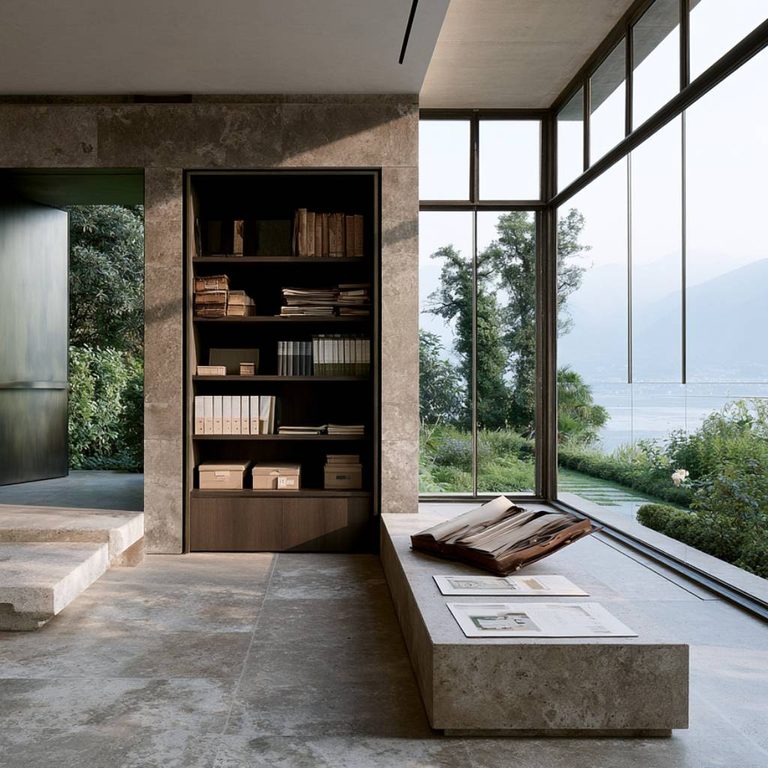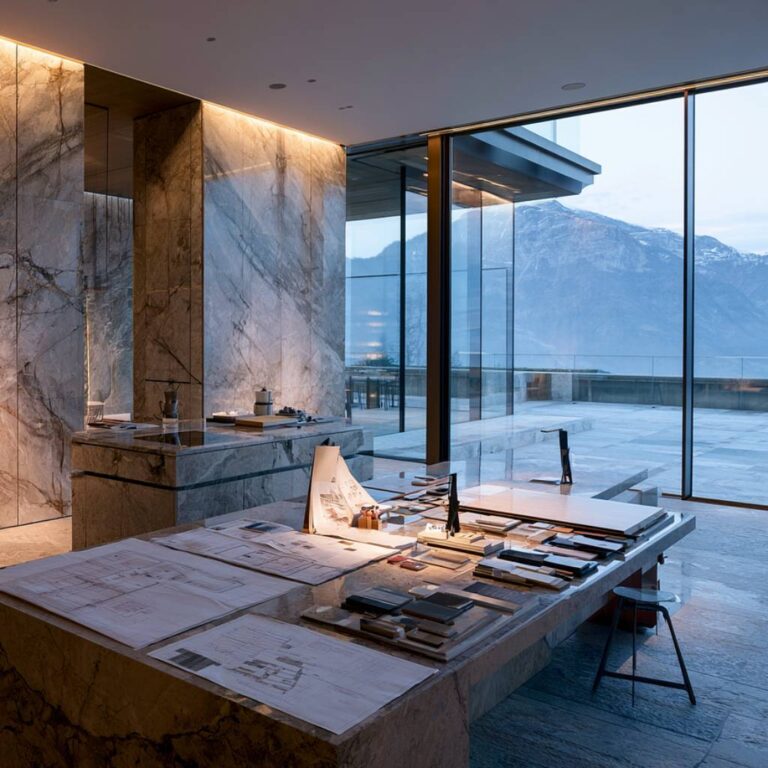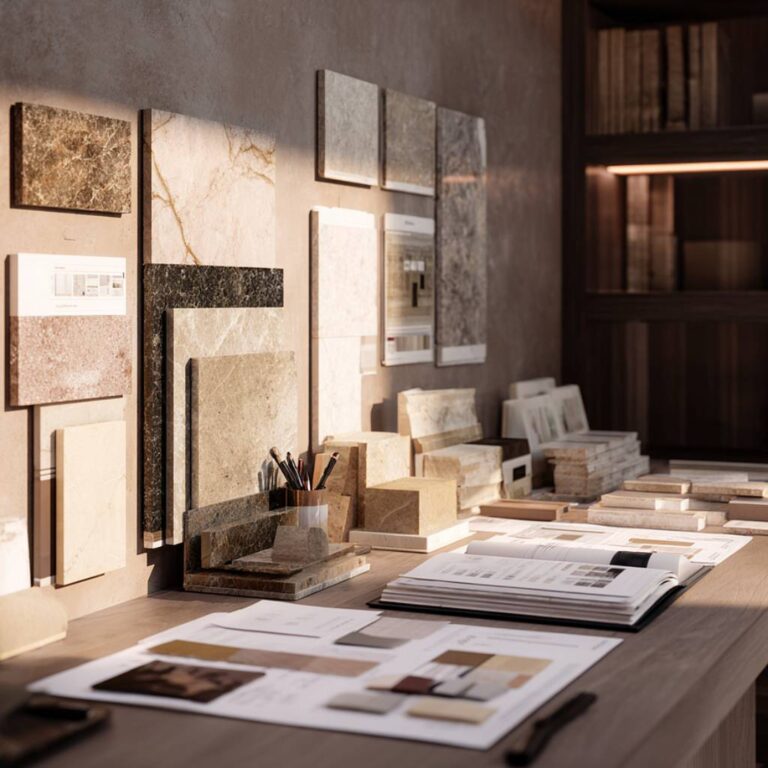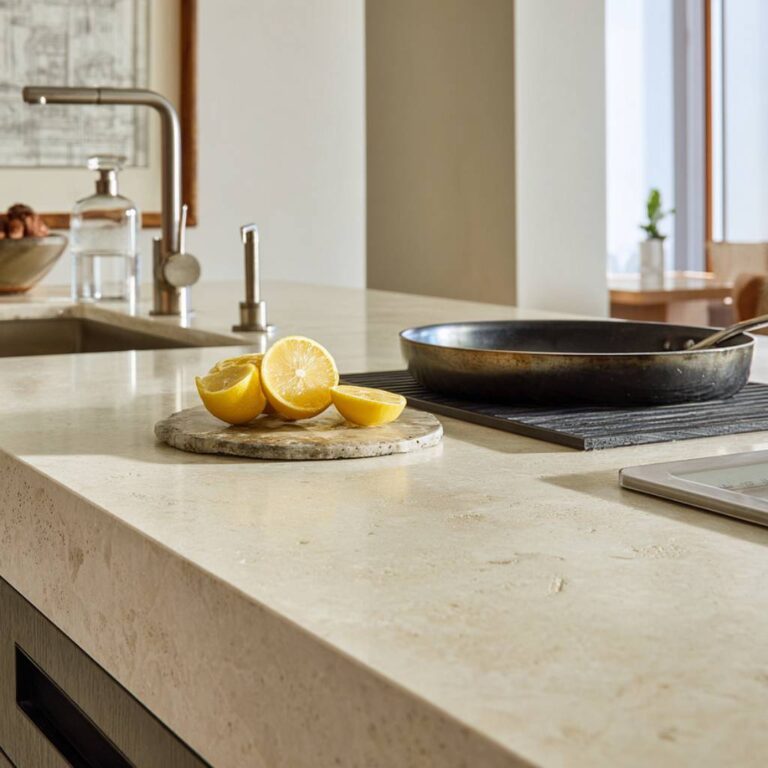
Luxury residential design often begins with a visual instinct.
A marble is selected for its veining, a quartzite for its depth, a limestone for its calm surface. The conversation revolves around colour, texture, and how the material photographs under light. Yet what defines the long-term success of these surfaces is rarely visible at the moment of selection.
It is performance.
In high-end homes, stone is expected to operate across vastly different conditions. The same material may appear in an entry foyer, a bathroom floor, an outdoor façade, or a staircase. Each of these environments imposes different stresses, yet the selection process often treats them as visually interchangeable.
This is where most projects begin to drift, from design intent to material reality.
Testing Is Not Technical. It Is Strategic
There is a tendency to view stone testing as a backend exercise, something confined to laboratories and specification sheets. In reality, testing is a design decision.
Each test answers a specific question about how a material will behave over time. When those questions are not asked early, the design begins to rely on assumption rather than evidence.
Absorption, for instance, is not just a number. It determines how a stone reacts to moisture, staining, and environmental exposure. A highly absorptive limestone may perform beautifully in a dry living space, yet fail in a wet entry or outdoor condition where water becomes a constant variable.
Testing, therefore, is not about compliance. It is about placement.
Understanding the Core Properties
A disciplined stone selection process begins with four fundamental performance criteria. These are not arbitrary metrics, they are directly tied to how spaces are used.
Density and absorption, typically measured through standards like ASTM C97, define how porous a material is. This becomes critical in bathrooms, exterior walls, and any surface exposed to water. A low-density stone in a high-moisture zone is not a design risk but it is a predictable failure.
Compressive and flexural strength, tested under ASTM C170 and C880, determine how the stone behaves under load and stress. Flooring, staircases, and large-format vertical applications depend on this. Without adequate strength, even a visually flawless slab can crack under real-world conditions.
Abrasion resistance, measured by ASTM C1353, becomes relevant in high-traffic zones. Entry foyers, corridors, and living areas subject the surface to constant wear. Over time, stones with low abrasion resistance lose their finish, altering the visual consistency of the space.
Slip resistance, defined through ANSI A326.3 or ASTM C1028, is perhaps the most underestimated factor in residential projects. Wet floors, polished finishes, and smooth stones can create unsafe conditions if friction is not considered early in the selection process.
These tests are not independent. Together, they form a behavioural profile of the material.
Where Testing Actually Matters
One of the most critical shifts in thinking is moving from “what is this stone?” to “where will this stone perform?”
In wet areas such as bathrooms, pool decks, and entry thresholds, absorption and slip resistance take priority. A stone that performs well structurally but absorbs water easily can deteriorate quickly, leading to staining, surface damage, or even microbial growth.
In high-traffic interiors, abrasion resistance becomes the defining factor. A polished marble floor may look pristine on installation day, but without sufficient resistance, it will begin to dull unevenly, creating visual inconsistency across the space.
For façades and exterior applications, density and durability dominate. Exposure to temperature variation, moisture, and environmental pollutants demands a material that can withstand expansion, contraction, and long-term weathering.
Staircases, often overlooked, require a combination of strength and slip resistance. These are transitional surfaces where safety and durability intersect, and where material failure has immediate consequences.
Each condition demands a different hierarchy of properties. Treating all surfaces the same is where luxury begins to lose its precision.
From Material to Method
The most effective way to approach stone selection is through a “material + method” mindset.
This means that the choice of stone is never isolated from how it will be installed, finished, and maintained. A dense stone may still fail if installed without proper backing or jointing. A slip-resistant surface may lose its effectiveness if polished incorrectly.
Design, therefore, extends beyond selection into detailing.
Edge conditions, substrate preparation, joint widths, and finishing techniques all interact with the inherent properties of the material. When these are aligned, the result feels effortless. When they are not, even the most expensive stone begins to underperform.
Why This Is Often Ignored in Residential Projects
In large commercial or institutional projects, testing is embedded within the process. Specifications are rigorous, and performance criteria are non-negotiable.
In residential work, however, decisions are often accelerated by timelines, budgets, or aesthetic priorities. Testing is seen as optional, or worse, as something that can be addressed later.
But material behaviour does not adjust to project timelines.
When performance is not considered early, corrections become reactive. Surfaces are replaced, finishes are modified, or maintenance becomes excessive. What could have been resolved through testing becomes a long-term compromise.
Building a Testing Matrix
A more disciplined approach is to create a testing matrix, a simple framework that connects material properties to specific applications.
Instead of evaluating stone in isolation, the matrix asks:
- Where will this material be used?
- What conditions will it be exposed to?
- Which properties are critical in this context?
By mapping tests to spaces, the selection process becomes structured rather than intuitive.
A bathroom floor demands slip resistance and low absorption.
A living room wall may prioritise visual continuity over structural strength.
An exterior façade requires density and weather resistance above all else.
This matrix does not complicate the process, it clarifies it.
Redefining Luxury Through Performance
There is a persistent misconception that luxury is defined by rarity or cost. In reality, luxury is defined by how seamlessly a material performs over time.
A surface that maintains its integrity, resists wear, and continues to feel intentional years after installation creates a deeper sense of quality than one that simply looks impressive on day one.
Testing enables this continuity.
It ensures that the material not only meets the design vision but sustains it under real conditions. It transforms stone from a visual element into a reliable component of the architecture.
A Simple Shift in Thinking
The question is not whether testing is necessary.
The question is when it is considered.
If testing is introduced at the end of the process, it becomes a constraint. If it is embedded at the beginning, it becomes a guide.
In high-end residential design, where expectations are uncompromising, this distinction matters.
Because ultimately, the success of a material is not defined by how it looks when installed.
It is defined by how it performs when lived with.