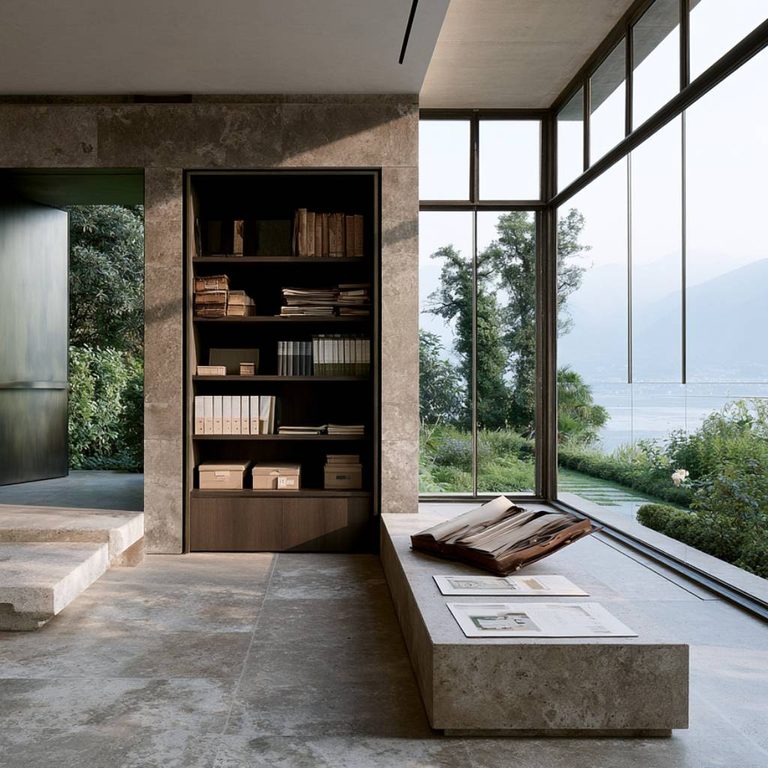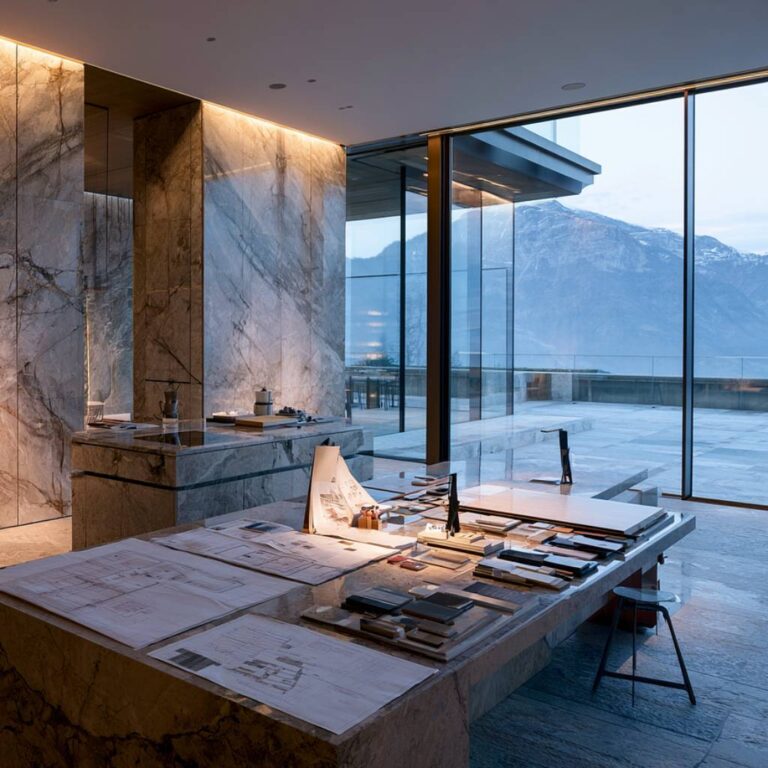
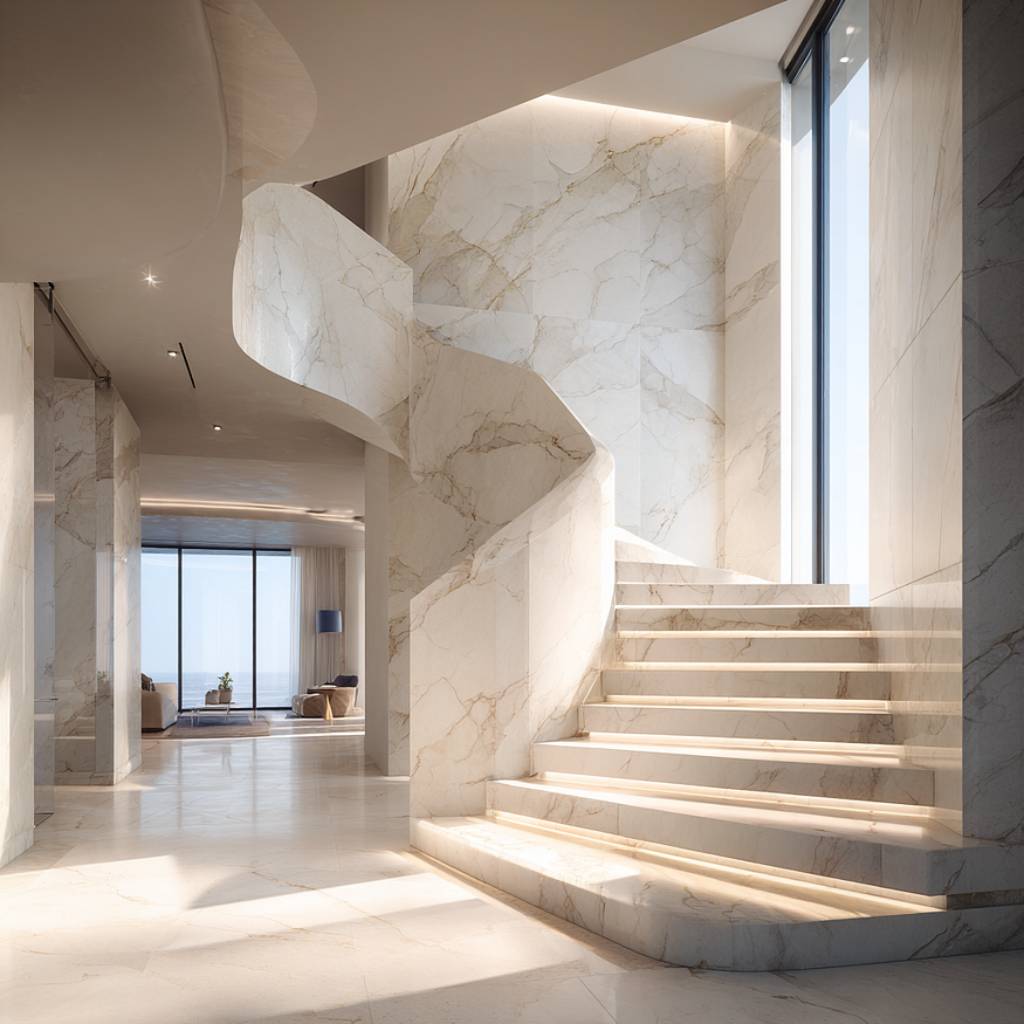
There are moments in architecture when a surface appears resolved, complete, almost beyond question, until a shift in light quietly dismantles that certainty. A staircase clad in premium stone once stood as one such example. In daylight, it was everything it was meant to be: aligned, composed, visually disciplined. The joints were tight, the edges appeared consistent, and the geometry seemed to hold together with the kind of calm precision that luxury projects promise. It passed handover without resistance. There was no visible defect, no immediate reason for concern. But architecture is not experienced in a single moment, and surfaces are not tested under a single condition. When the same staircase was later observed under night lighting like directional, sharper, less forgiving the illusion fractured. What had once appeared seamless began to reveal subtle lippage. Edge returns no longer aligned as cleanly. Variations that were invisible in soft daylight became pronounced under raking light. The surface had not changed. The perception had. And in that shift, the truth of the system emerged.
This is where most failures in stonework quietly originate, not in material, but in the accumulation of decisions that precede installation. Stone, by its very nature, is honest. It does not conceal inconsistency; it reveals it over time and under the right conditions. What is often mistaken as a defect in stone is rarely about the stone itself. In this case, the underlying issue was tolerance stacking, a phenomenon that is rarely discussed in design conversations but is almost always present on site. Each layer of the assembly, the substrate, the adhesive bed, the fabricated stone, and the installation, carries its own permissible variation. Individually, these variations are within acceptable limits. But when they combine without coordination or control, they exceed what the eye can tolerate. The result is not a dramatic failure, but a gradual misalignment that becomes visible only when light begins to interrogate the surface.
What makes this failure more instructive is not its visibility, but its origin in overlooked processes. The project did not fail because of a lack of effort or intent. It failed because certain steps were assumed rather than verified. Mock-ups were either absent or insufficiently representative. They tested appearance, but not performance. They validated the look of the stone, but not its behaviour under real conditions. Lighting, which plays a decisive role in how stone is perceived, was treated as a finishing layer rather than an active participant in validation. As a result, the system was approved in isolation, not as an integrated assembly. The staircase that looked correct in one condition was never tested in another, and the gap between those conditions became the site of failure.
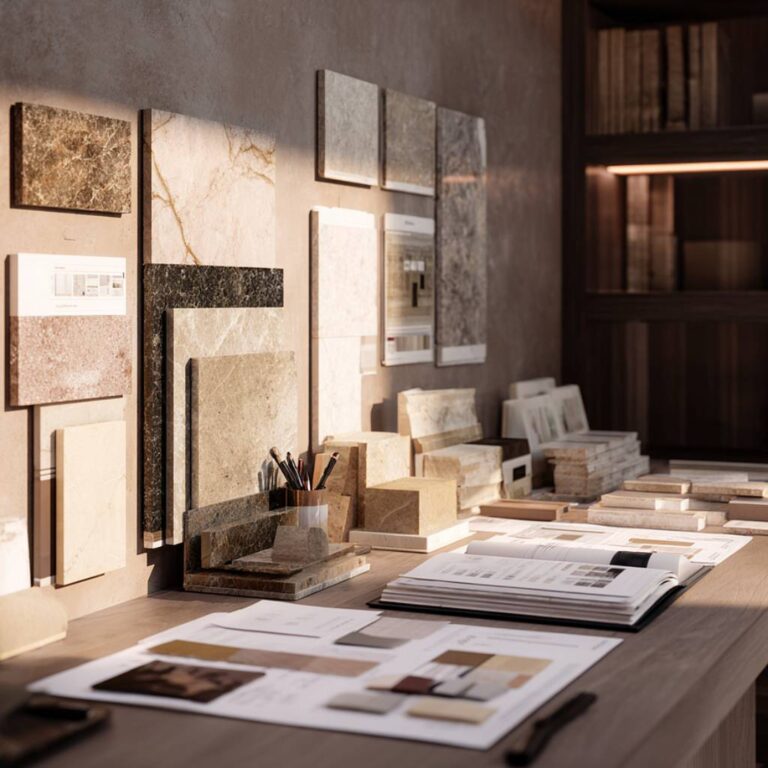
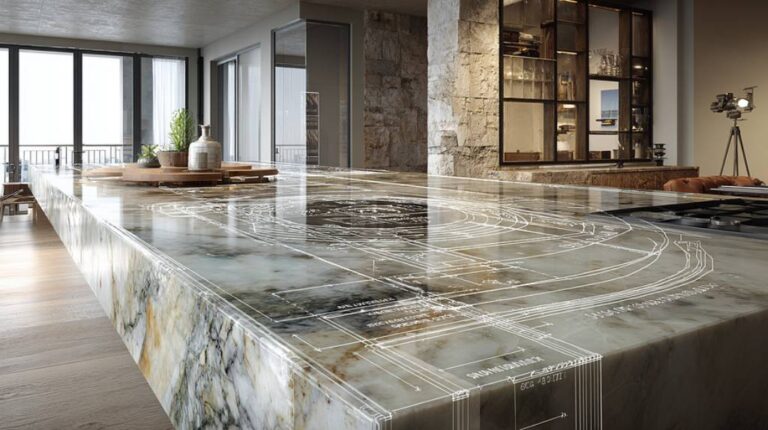
This points to a deeper misunderstanding of what “precision” means in high-end construction. Precision is often mistaken for tight joints, clean edges, or high-quality material selection. But in reality, precision is a systemic outcome. It is not achieved at the moment of installation; it is built through a sequence of aligned decisions. It begins with defining tolerances clearly and not just for individual components, but for how they interact. It requires an understanding that drawings, no matter how detailed, are abstractions. They cannot account for the variability of site conditions, the behavior of materials, or the influence of light. This is where mock-ups become critical not as visual samples, but as full-scale tests of reality. A meaningful mock-up does not simply display stone; it simulates the environment in which that stone will exist. It incorporates actual lighting conditions, replicates installation methods, and exposes the assembly to the same scrutiny it will face post-handover.
Lighting, in particular, must be understood not as an aesthetic layer, but as a diagnostic instrument. Directional lighting, grazing angles, and concealed fixtures have the ability to amplify even the smallest inconsistencies. What appears acceptable under ambient light can become unacceptable under focused illumination. Yet, in many projects, lighting design and stone installation are treated as separate domains, each optimized independently. The consequence is predictable: a surface that satisfies one discipline fails under another. The integration of lighting into the validation process is not optional in such cases. It is essential. A minimal lighting checklist during mock-ups like testing angles, intensity, and direction can reveal issues that would otherwise remain hidden until it is too late to correct them.
The concept of “international-standard installation” is often referenced in luxury projects, but it rarely translates into enforceable processes. Standards are not achieved through intention alone. They are achieved through documentation, verification, and accountability. Tolerances must be defined in measurable terms. Mock-ups must be evaluated against those terms. And approvals must be conditional, not absolute. Without this structure, quality becomes subjective, dependent on perception rather than performance. In such an environment, small deviations are easily overlooked, and their cumulative impact is underestimated.
What the staircase ultimately reveals is not a failure of craftsmanship, but a failure of sequencing. The order in which decisions are made and the rigor with which they are validated, determines the final outcome far more than the quality of any single component. When sequencing is disciplined, each step reinforces the next. When it is fragmented, each step introduces uncertainty. By the time installation begins, the outcome is already constrained by what has or has not been verified. The site does not create quality; it executes what has been decided earlier.
There is also an important lesson here about perception itself. Architecture is experienced over time, under varying conditions, and from multiple viewpoints. A surface that appears perfect at one moment may reveal its limitations at another. Designing for a single condition is, therefore, insufficient. True resolution lies in anticipating these variations and ensuring that the system performs consistently across them. This requires a shift from designing for appearance to designing for behaviour. It requires acknowledging that materials respond to light, to moisture, to installation techniques and that these responses must be understood, not assumed.
In the end, the staircase does not tell a story of failure in isolation. It tells a story of how small, reasonable decisions, when left uncoordinated can lead to outcomes that contradict the intent of the project. It reminds us that luxury is not defined by material alone, but by the discipline with which that material is handled. And it reinforces a simple but critical idea: surfaces do not fail under light. They are revealed by it. The real work of architecture lies in ensuring that when that moment of revelation comes, the system beneath the surface is strong enough to hold.