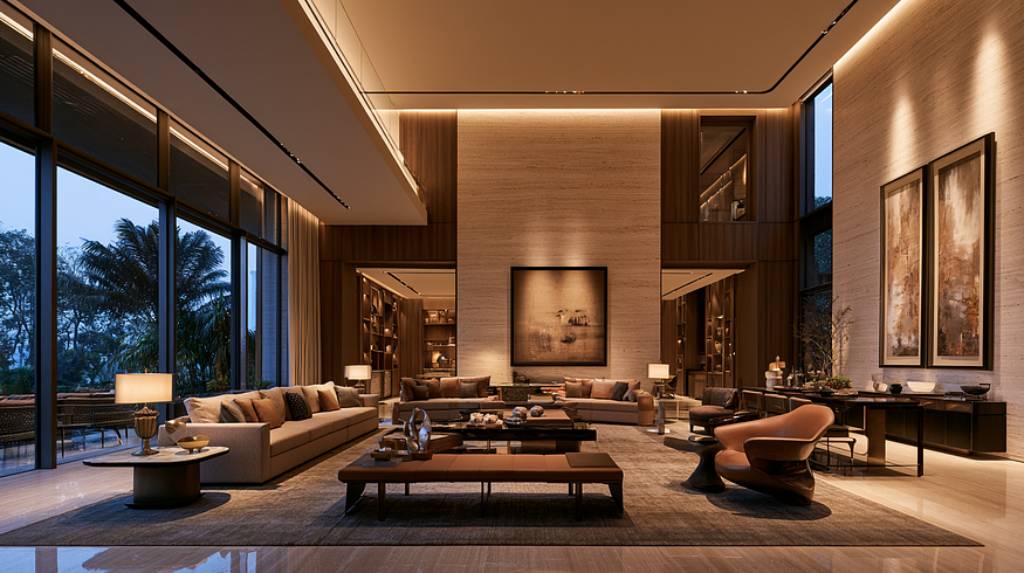
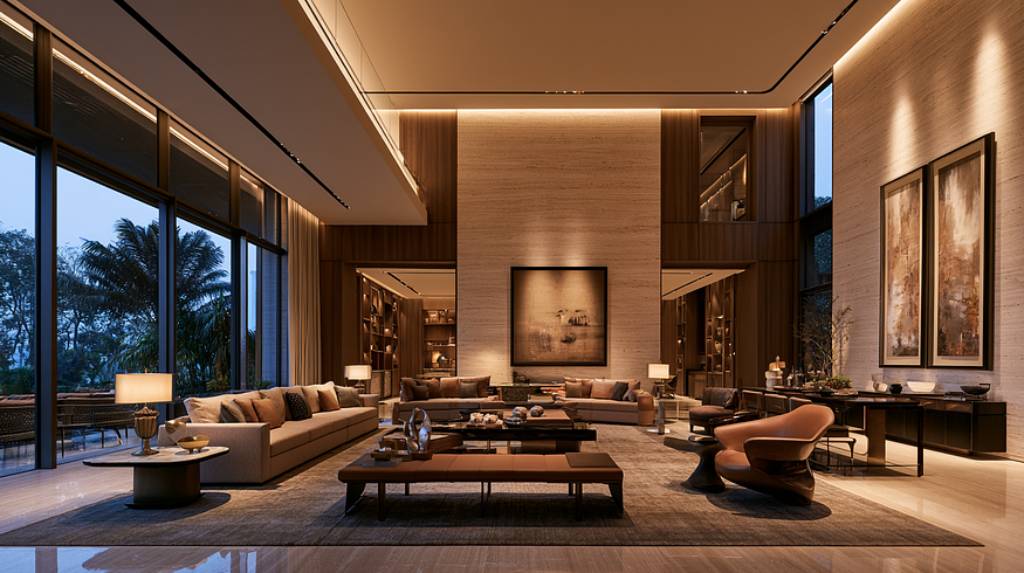
The most expensive lighting plan can still feel ordinary if every fixture is controlled individually and nobody designs what the house should feel like at different hours.
A beautifully designed residence can contain excellent luminaires, concealed coves, carefully aimed spotlights, decorative pendants and sophisticated automation, yet still require its owners to spend the evening adjusting six different dimmers.
That is a lighting-design failure hiding inside an expensive specification.
A home does not need the same light at 7:30 in the morning, when guests arrive for dinner, during a late meal, while someone reads in the living room or when a child walks to the bathroom at 2:00 a.m. Yet residential lighting is still frequently documented fixture by fixture and circuit by circuit. The electrical drawings explain which light turns on. They do not always explain how several layers of light should work together at a particular moment.
That is the invisible decision behind a truly sophisticated lighting scheme.
It is not simply where the downlights go.
It is deciding, early enough, which lighting zones need to act together, at what intensity, through which controls, for the recurring ways the home will actually be used.
The five scenes discussed here are an editorial framework rather than a building-code requirement: Arrival, Entertaining, Dining, Evening and Night. A particular family may require different scenes, and a large residence may need many more. The principle is what matters. The lighting should be organised around life before the electrical infrastructure makes those decisions difficult to change.
A Scene Is Different From a Dimmer
A dimmer controls a light or group of lights. A lighting scene coordinates several such groups at predetermined levels.
Lutron’s technical documentation describes a scene as a light or group of lights adjusting to preset levels, while DALI, the internationally standardised digital lighting-control protocol, allows predetermined scene values to be stored and recalled across lighting-control gear. DALI equipment can store multiple scenes, demonstrating that scene-setting is an established control-system function rather than a decorative automation feature.
Consider a living room containing recessed ambient lighting, wall washers for art, concealed shelf lighting, a decorative pendant and two floor lamps. Five circuits do not automatically create five useful choices.
A well-programmed Entertaining scene might bring the wall washers and lamps forward, restrain the general downlighting and allow the pendant to contribute without dominating. An Evening scene might lower almost everything while retaining enough light at seating and circulation points. One keypad command recalls the relationship.
That relationship is the design.
This is why the scene strategy should be established before electrical circuiting is finalised. If several fixtures that need to behave differently are placed on one circuit, programming cannot separate them later. Conversely, dividing every luminaire into unnecessary zones creates complexity without necessarily improving the experience.
Luxury lighting therefore begins with intelligent zoning.
Scene One: Arrival
Arrival lighting should allow the house to reveal itself gradually.
The entrance foyer, principal circulation route, stair, artwork and immediate destination should feel legible without every ceiling light switching on at full output. In a large residence, the arrival sequence may extend from the entrance vestibule through a gallery to the main living space. Lighting can reinforce that progression.
The important design question is not simply, “How bright should the foyer be?”
It is which elements should lead the eye.
A softly illuminated wall, a washed artwork, a staircase with controlled low-level lighting and a warmer layer in the adjoining room can create orientation more effectively than a ceiling full of equally bright downlights.
This scene also exposes the importance of coordination with daylight. If the entrance receives strong natural light during part of the day, an identical scene may not be appropriate at every hour. Automated controls can respond differently depending on the system selected, but even a manually recalled scene should be commissioned with the real daylight conditions in mind.
The Arrival scene should therefore be tested from the actual threshold, not from the electrical panel.
Scene Two: Entertaining
Entertaining is where poor zoning becomes obvious.
Luxury living rooms frequently contain several visually important components: art, furniture groupings, architectural surfaces, objects, landscape views, decorative fixtures and sometimes adjacent bars or dining areas. Turning every light to 70 per cent does not create atmosphere. It produces uniform brightness.
The Entertaining scene should establish hierarchy.
Accent lighting may become more prominent. General illumination can recede. Decorative fixtures may operate at a lower output than expected because their role is visual rather than task-based. Adjacent spaces should feel connected without competing for attention.
This requires separate control of lighting layers that actually perform different jobs.
The control technology itself must also be compatible with the luminaires and drivers. This is one of the least glamorous but most consequential lighting decisions. LED products described as dimmable do not automatically produce identical dimming behaviour with every control system. Lutron’s technical guidance explicitly notes that LED lamp or fixture compatibility with a particular dimmer needs to be established through testing, whether through a mock-up or manufacturer testing. It also identifies low-end trim as one tool used to optimise dimming behaviour. This is manufacturer guidance rather than a universal performance guarantee, but the broader specification principle is important: dimming performance should be verified before installation, not discovered during commissioning.
A scene that depends on beautiful low-level light is useless if the fittings flicker, drop out or refuse to dim sufficiently.
Scene Three: Dining
Dining lighting is less about illuminating a room than establishing a centre of gravity.
The table should carry visual importance while the surrounding architecture remains present but quieter. That balance may involve a pendant or chandelier, narrow-beam downlights, wall washing, artwork illumination, joinery lighting or concealed perimeter light depending on the architecture.
The critical coordination issue is that these sources need separate control.
If the decorative fixture and the surrounding general lighting share one circuit, the designer loses control of their relationship. If artwork lighting cannot be reduced independently, it may compete with the table. If an adjoining kitchen remains at task-lighting levels, the dining atmosphere can disappear entirely even though the dining room itself was beautifully designed.
This is where the scene must extend beyond the boundaries of one room.
In open-plan luxury homes, a Dining command may affect the dining space, adjacent living room, kitchen, corridor and sometimes motorised shades. Scene-based control systems can coordinate multiple zones, and technical guidance for residential control systems specifically describes scenes that combine groups of lights at preset levels.
The final levels, however, should not be decided entirely on drawings.
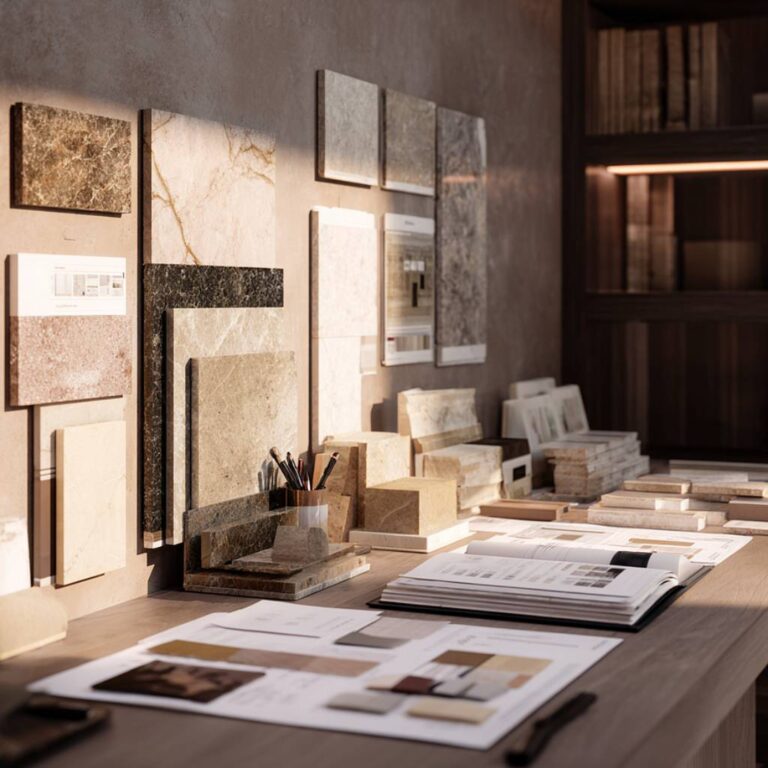
The dining table has to exist. The artwork needs to be installed. The actual materials must be visible. Light reflecting from pale marble behaves differently from light absorbed by dark timber. Polished metals create highlights that renderings do not always predict accurately.
The final Dining scene belongs to commissioning.
Scene Four: Evening
The house should not remain in Entertaining mode simply because nobody has switched it off.
As the evening becomes quieter, the lighting hierarchy should change.
General ceiling illumination can reduce. Lamps, joinery lighting, coves and selective architectural accents can carry more of the visual work. In bedrooms and private lounges, the objective may shift from displaying architecture to supporting reading, conversation and transition towards sleep.
There is also a physiological reason to take evening lighting seriously, although claims in this area should be made carefully. The International Commission on Illumination states that light is an important synchroniser of the human biological clock and notes that light exposure during the evening and night can affect sleep-related biological responses. It also cautions against simplistic marketing terminology around so-called circadian or human-centric lighting.
The architectural implication is not that every luxury residence requires an elaborate colour-changing system.
It is that evening lighting deserves deliberate consideration.
Where tunable-white luminaires are genuinely part of the specification, control systems can adjust correlated colour temperature as well as intensity. DALI’s colour-control provisions, for example, include tunable-white control capable of moving between warmer and cooler white-light settings when compatible control gear is used.
But tunable white should never become technology for technology’s sake. A well-designed fixed-colour system with excellent dimming may serve a residence better than an unnecessarily complicated tunable system.
The right question is what the occupants need the home to do.
Scene Five: Night
The Night scene may use the least light and require some of the most careful thinking.
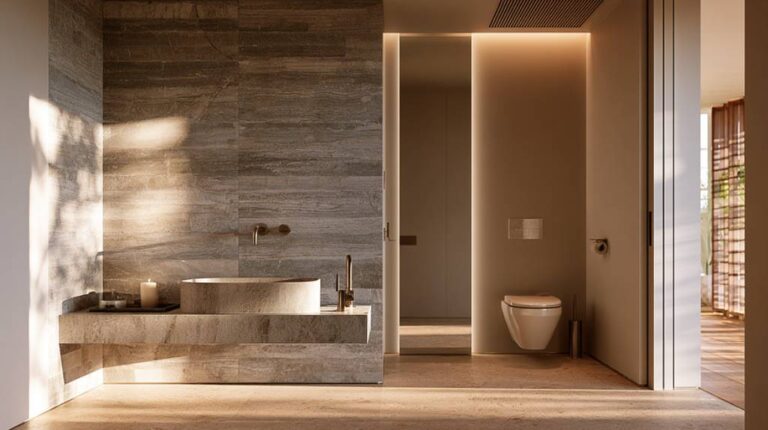
Nobody walking from a bedroom to a bathroom needs the entire passage illuminated as if guests were arriving.
Night circulation can instead rely on carefully positioned low-level sources at skirtings, stairs, corridors, dressing areas or bathroom thresholds. The objective is orientation and safe movement while avoiding unnecessary brightness.
This is where lighting design becomes inseparable from architectural detailing.
A low-level stair light cannot be added elegantly after the stone wall is finished. Concealed joinery lighting requires driver locations, wiring routes and access. Motion sensors need appropriate placement and logic. If floor-level illumination is intended to guide circulation, its positions should be coordinated before wall cladding and joinery fabrication.
The Night scene also needs restraint in automation.
Automatic does not necessarily mean intelligent. A sensor that triggers a bright corridor because somebody moved in the bedroom has technically worked and experientially failed.
Commissioning should therefore consider trigger, delay, fade, intensity and which zones respond.
The Five Scenes Must Be Designed Before the Keypad
The control interface comes surprisingly late in the real decision chain.
Before choosing a keypad finish or engraving scene names, the project team needs a scene schedule.
That schedule should identify each lighting zone and establish how it behaves under Arrival, Entertaining, Dining, Evening and Night. Where tunable-white lighting is used, colour-temperature behaviour should also be documented. Motorised shading, decorative lighting and landscape views may need to be included where relevant.
The architect or interior designer should establish the intended atmosphere and visual hierarchy. A specialist lighting designer can translate that into lighting layers, aiming and source selection. The electrical consultant and contractor need to protect the zoning and wiring strategy. The automation integrator must understand the design intent rather than simply programming percentage values. Luminaire and control manufacturers should provide compatibility information and relevant technical data.
Physical controls still matter. Manufacturer guidance for residential control systems recommends multiple layers of control and notes the immediacy and tactile feedback of physical keypads and local zone controls. Voice or app control can supplement them, but a luxury home should not require someone to locate a phone simply to change the room from Dining to Evening.
Commissioning Is Where the Lighting Design Becomes Real
A lighting scene should never be considered complete when the electrician confirms that every circuit switches on.
That only proves connectivity.
Commissioning begins when the architecture is substantially finished and the furniture, art, rugs, curtains and major decorative elements are present. The lighting designer or responsible project team should walk through each principal scene under realistic conditions and adjust intensities, aiming, fade behaviour and control logic.
For complex LED specifications, mock-ups and compatibility tests should occur earlier as well. Industry guidance emphasises that dimming performance depends upon the actual combination of LED source, driver and control.
The final scene schedule should then be documented rather than left solely inside an integrator’s programming file.
A future service technician should be able to understand why a particular zone was assigned to a particular scene. The homeowner should know that scenes can be adjusted as the way the family uses the house changes.
That is especially important in large residences. Rooms change function. Art moves. Furniture is replaced. Children grow older. Entertaining habits change.
A sophisticated control system should accommodate the life of the home rather than freeze it on handover day.
Five buttons will never define every luxury residence. Five deliberate modes of living, however, are a useful place to begin.
Arrival. Entertaining. Dining. Evening. Night.
The value is not in the names. It is in making the project team decide how the architecture should behave during each one.
That is the distinction Blueprint Stories returns to repeatedly. Expensive luminaires can be purchased late. The quality of the experience depends on decisions made much earlier: zoning, compatibility, circuiting, aiming, control logic, commissioning and the discipline to design light around life rather than the ceiling plan.
Blueprint Stories documents the decisions, technical coordination and execution controls behind high-performing luxury homes. Architects, designers, lighting consultants, automation specialists, contractors and product manufacturers with a relevant completed project, lighting-control system, technical mock-up or independently verifiable demonstration may write to blueprintstories29@gmail.com for editorial consideration. Participation does not guarantee publication or favourable coverage, all material support is disclosed, and Blueprint Stories retains final editorial control.
Follow or subscribe to Blueprint Stories for future articles on the decisions behind homes that perform as carefully as they are designed.