When millimetres quietly begin to shape architecture
In conversations about materials, attention usually settles on colour, texture, or origin. Stone is described as Italian or local, wood as veneer or solid, metal as brass or steel. These choices feel significant because they are visible and easy to compare. Yet on a construction site, what most strongly determines whether a space feel resolved or slightly unsettled is something far less dramatic and that is material thickness.
A few millimetres rarely seem important when viewed on drawings. But once construction begins, those millimetres start influencing edges, junctions, step heights, alignments, and even the way light settles on a surface. Thickness stops being a technical measurement and begins shaping the lived experience of architecture. What appears to be a finish decision quietly becomes a spatial one.
Thickness as an architectural decision
Every material carries depth. Stone slabs may be 18, 20, or 25 millimetres.
Wood panels accumulate thickness through ply, laminate, and polish.
Metal sheets may remain thin or gain rigidity through folding and framing.
Individually, these variations feel manageable. Architecture, however, is never made of isolated surfaces. It is formed where surfaces meet, turn, stop, or continue. At those moments of meeting, thickness becomes visible. A junction that felt simple on paper begins demanding adjustment in reality. Clean lines require anticipation; without it, trims and fillers begin to appear, and minimalism slowly dissolves into compromise.
Where millimetres begin to matter
Material thickness reveals its influence through small but decisive conditions:
Reveals and shadow lines
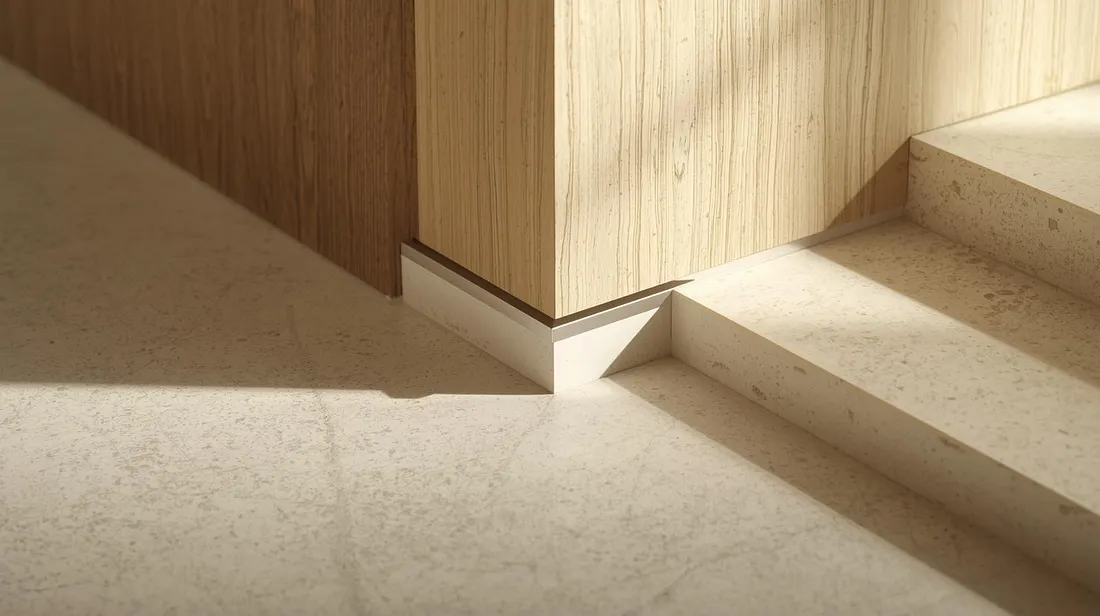
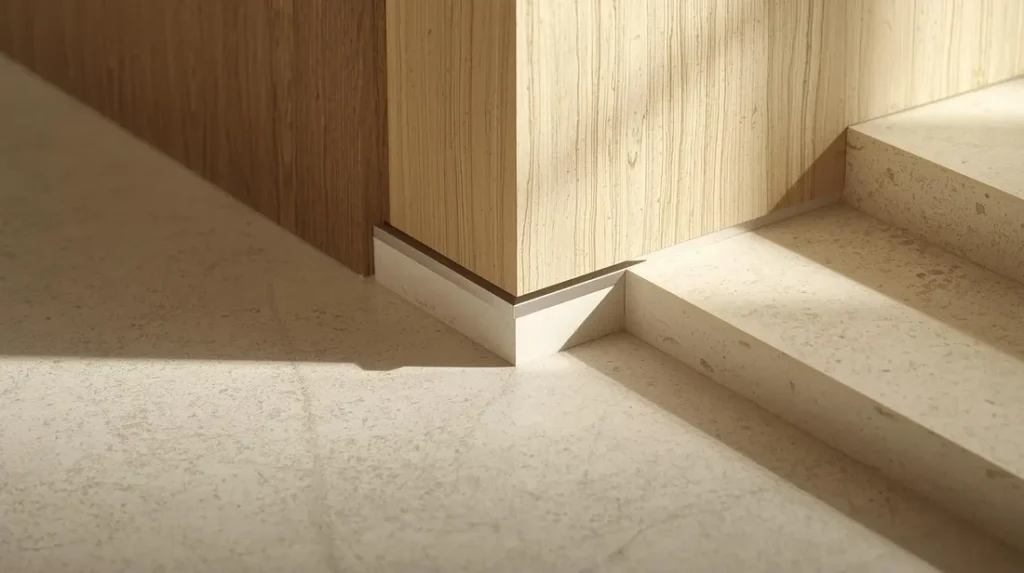
Depth controls shadow. A thicker stone edge produces a calm, confident line of darkness, while a thin surface may visually disappear. Much of what is perceived as refinement in luxury interiors is actually the careful orchestration of these shadows.
Edges and terminations
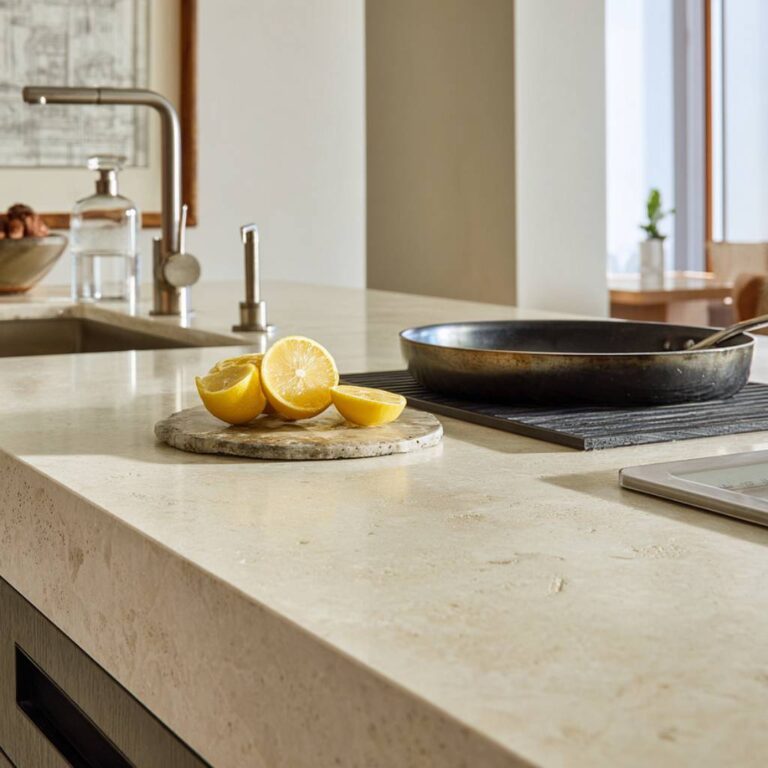
Thickness determines whether an edge can be softened, chamfered, or rounded. Thin materials demand sharper endings and often feel fragile. The sense of permanence people associate with high-quality construction frequently comes from the quiet weight held at edges.
Junctions between materials
When stone meets wood or metal meets plaster, mismatched depths force visible negotiation, stepped joints, trims, or uneven planes. Seamless transitions require thickness to be resolved long before materials reach the site.
Floor transitions and step heights
A change of even ten millimetres in flooring build-up can alter staircase risers or door thresholds across an entire home. What appears to be a late finish choice can ripple backward into structural correction.
Skirting and wall alignment
Flush skirting depends on coordinated plaster depth, panel thickness, and flooring level. Without this coordination, the clean simplicity often imagined in design becomes visually fragmented.
Each condition is small on its own. Together, they define whether a home feels effortless or improvised.
Thickness and the sequence of construction
Material depth also shapes time. Thicker stone may require deeper backing, earlier measurement, heavier lifting, and longer procurement. Wood build-ups can shift electrical box depths or door frame positions. Metal sections often need concealed fixing systems planned before walls close.
When thickness decisions arrive late, construction must adapt around them. Adaptation on site is rarely precise and almost never economical. What could have been resolved through drawing coordination becomes physical correction like cutting, packing, re-leveling, or rebuilding. The financial impact of thickness is therefore less about the material itself and more about when its depth was understood.
When stone becomes a system
Among common materials, stone exposes these realities most clearly. It cannot bend to disguise inaccuracy, nor compress to hide misalignment. Its thickness governs edge cutting, corner joining, slab continuity, and structural loading. Transportation, handling, and installation all depend on its depth.
At this point, the stone stops behaving like decoration. It begins functioning as a construction system, one that must coordinate with structure, waterproofing, joinery, and sequencing. When treated merely as a surface, failure appears later in the form of cracks, uneven joints, or visual heaviness. When treated as a system, it quietly stabilises the entire design.
Thickness, proportion, and longevity
Durability is often attributed to brand or origin, yet longevity is equally dependent on proportion.
Stone that is too thin may fracture under stress.
Wood that is excessively thick may warp or misalign hardware.
Metal lacking depth may vibrate, stain, or deform over time.
Correct thickness is not excess; it is balance between strength, weight, and connection. Homes that age gracefully are usually those where this balance was resolved early, before installation made change difficult. Time, in this sense, rewards proportion more than luxury.
A quieter understanding of material choice
Perhaps the most meaningful shift is to see materials not as isolated finishes but as participants in relationship. Architecture is not created by single surfaces but by conversations between depths, edges aligning, planes continuing, shadows forming consistently across rooms.
When thickness is thoughtfully resolved, spaces feel calm even without ornament. When it is ignored, no level of material richness fully restores coherence.
This is why millimetres matter.
Not because they are measurable, but because they are experiential.
The precision that holds architecture together
In the end, the success of stone, wood, or metal in a luxury home is not decided only by beauty or cost. It is decided by how precisely their depths are anticipated, coordinated, and allowed to meet without conflict. Thickness is rarely discussed, rarely celebrated, and almost never visible in photographs. Yet it is one of the quiet forces that allows architecture to feel complete.
Design clarity often lives not in the materials themselves, but in the millimetres that hold them together.