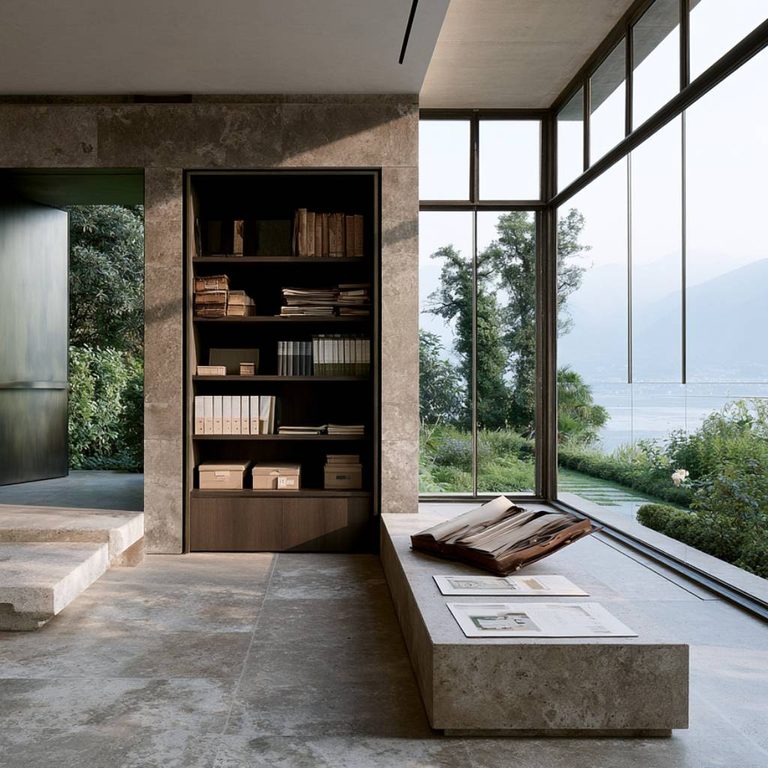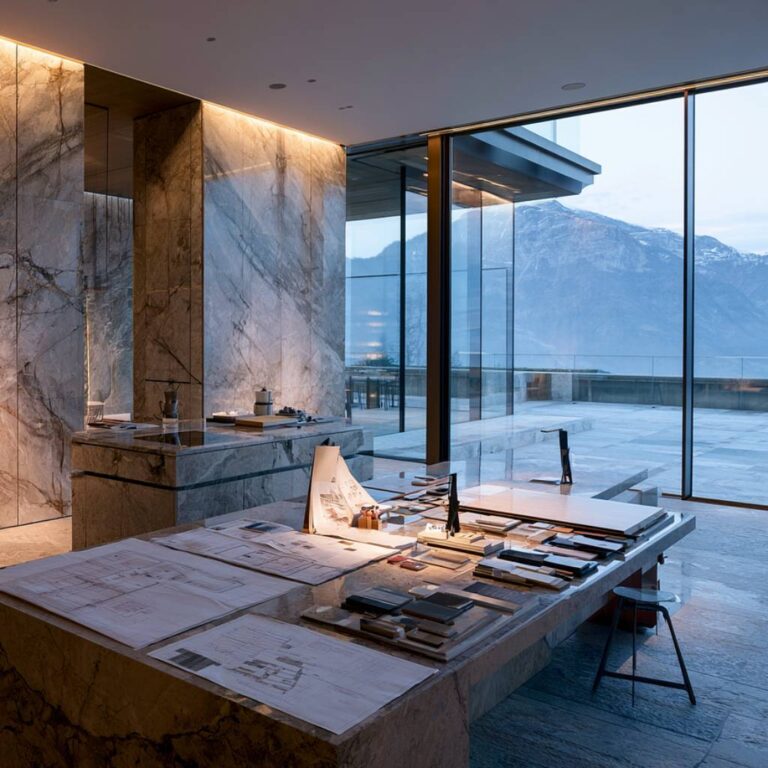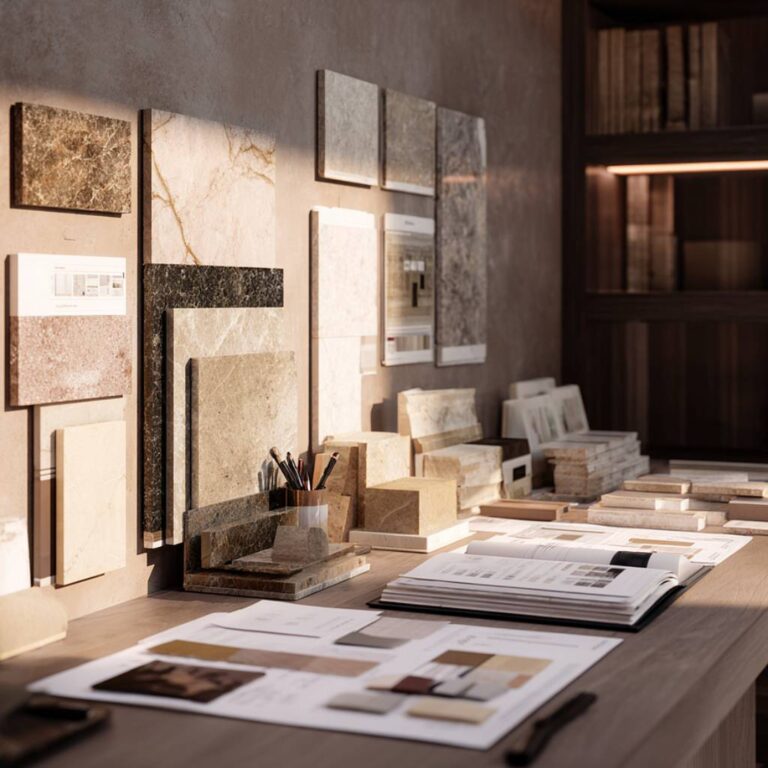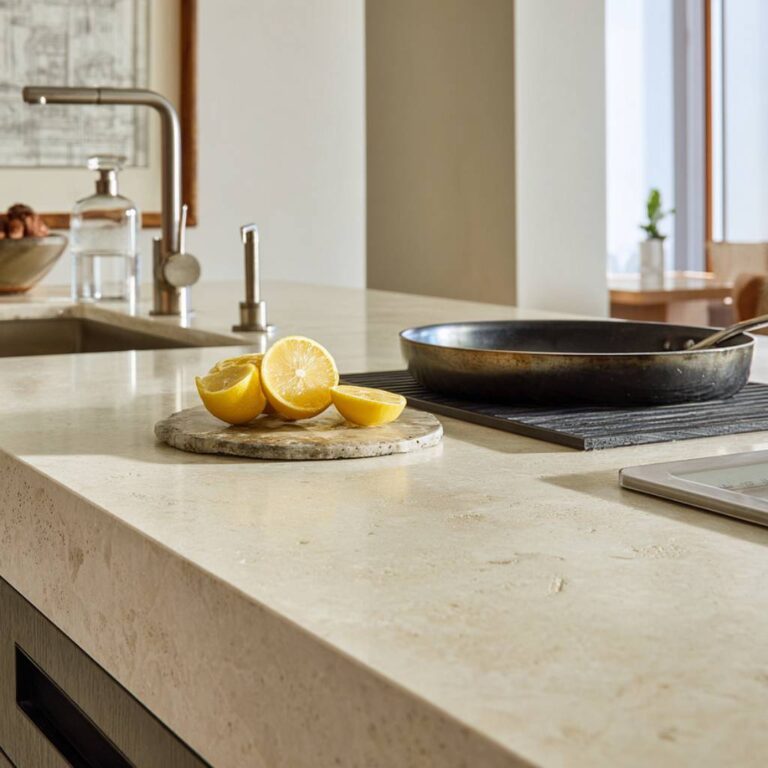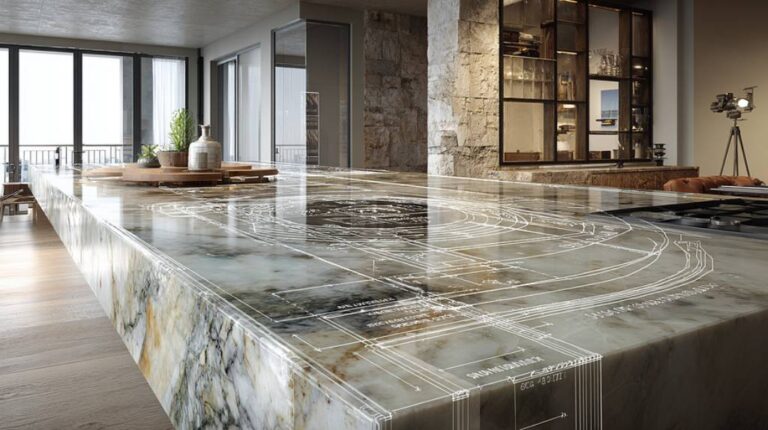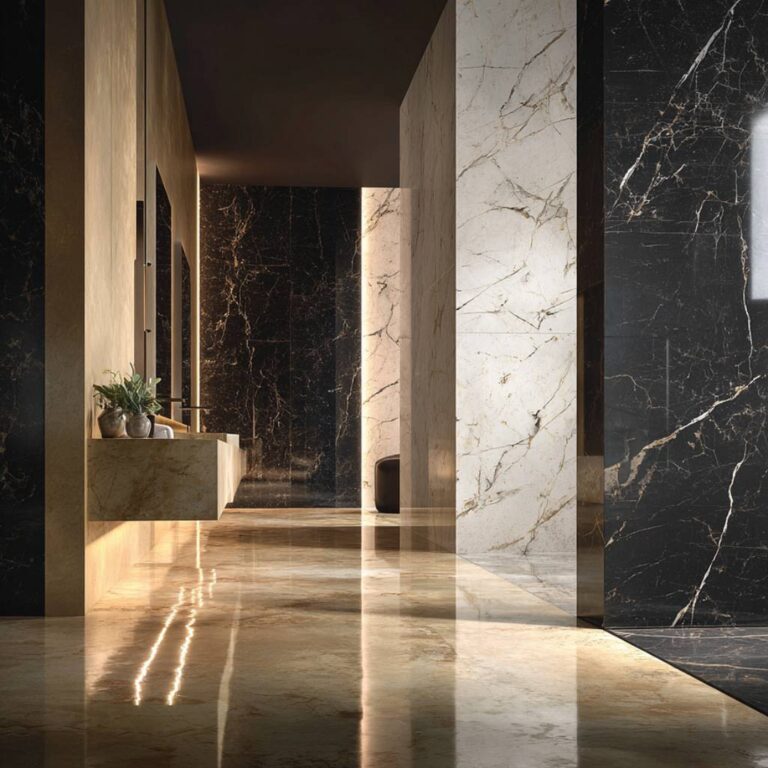
In luxury homes, refinement is rarely defined by the surface alone. Stone may be rare, wood may be beautifully finished, and metal may carry a precise sheen, yet the true emotional quality of a space is often decided somewhere quieter, at the exact points where these materials meet. Junctions hold a disproportionate power in architecture. They are small in scale but decisive in perception, revealing whether a home has been resolved with discipline or merely assembled with expense.
The first quiet distinction appears at the edge itself. Edge alignment determines whether a surface feels intentional or adjusted. When stone, plaster, or timber concludes in a perfectly controlled line, the eye experiences calm without consciously knowing why. Even a slight deviation, however, introduces restlessness. Precision at the edge is therefore not decoration but clarity, setting the tone for everything that follows in the space.
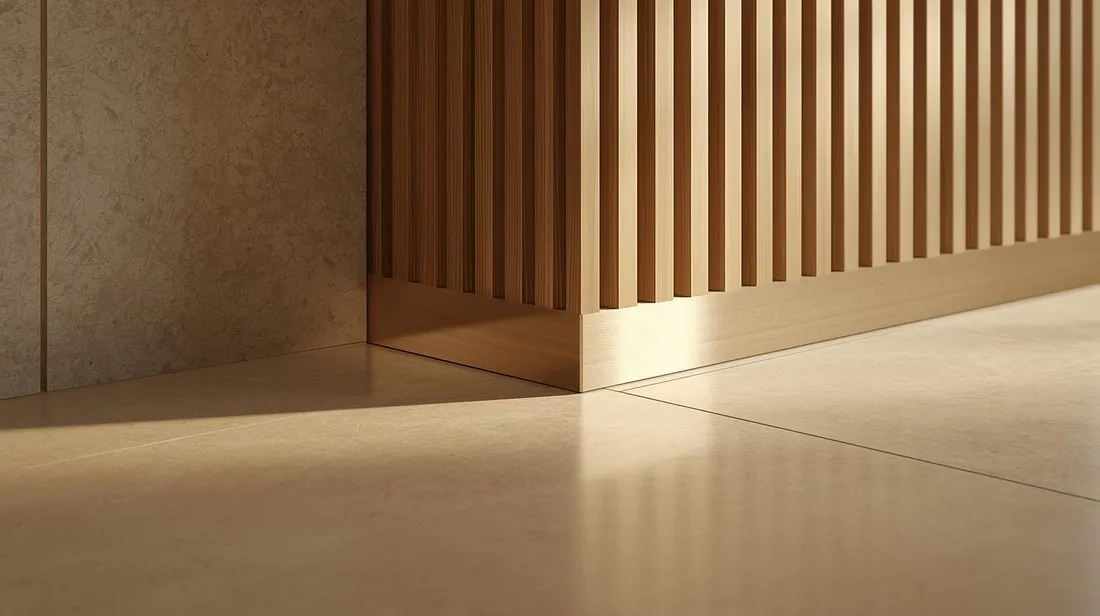
A second layer of refinement emerges through shadow. Carefully designed shadow gaps create separation without ornament, allowing surfaces to breathe and read independently. This thin line of darkness is subtle, yet it gives architecture lightness and control. Achieving such consistency demands structural foresight and exact execution, because irregular shadows immediately reveal misalignment. What appears minimal in design is often the result of maximum discipline in construction.
The third moment of truth lies in junction logic, where one material transitions into another. These meetings, stone to plaster, wood to metal, floor to wall; must resolve differences in thickness, movement, and tolerance without visible struggle. When handled well, the transition feels inevitable, as though the materials always belonged together. When handled poorly, trims and fillers begin to appear, and the illusion of effortlessness disappears. Junctions therefore expose the thinking behind the design more honestly than any surface finish.
Level transitions form the fourth distinction. Movement across spaces should feel continuous, whether stepping between rooms, approaching a balcony, or crossing from stone to timber. Even a few millimetres of misjudged height can disturb this continuity, creating thresholds that feel accidental rather than deliberate. True luxury often lies in the absence of such interruptions, where the body moves freely and the architecture remains quietly supportive.
The fifth detail concerns structural weight and material behaviour. Stone, wood, and metal each respond differently to load, moisture, and time. When these differences are ignored, edges chip, joints open, and surfaces begin to reveal stress. When they are respected, connections remain stable and calm for years. Premium execution therefore depends not only on visual alignment but on an understanding of how materials live and age together.
Tolerance and rework create the sixth dividing line between ordinary and exceptional construction. Late adjustments on site like small cuts, added trims, improvised fillers; may solve immediate problems but leave lasting visual tension. In contrast, projects that resolve dimensions early allow installation to proceed without correction. The resulting calmness is not dramatic, yet it is unmistakable. Spaces feel composed rather than negotiated.
The final and perhaps most revealing detail is the treatment of stone edges and material transitions. Stone does not easily forgive inaccuracy. Its joints, mitres, and chamfers make precision visible, turning millimetres into experience. When edges align perfectly across surfaces and corners, the material begins to feel architectural rather than decorative. When they drift, even rare stone loses authority. Stone therefore does not create luxury on its own; it reveals whether discipline existed before it arrived.
Taken together, these seven moments describe a deeper understanding of refinement. Premium spaces are rarely louder or more complex. They are simply more resolved. Lines remain consistent, materials meet without conflict, and movement feels uninterrupted. These qualities are easy to overlook in drawings and difficult to correct after construction, which is why they ultimately distinguish enduring architecture from temporary impression.
True luxury, then, is not announced through cost or ornament. It is expressed through quiet resolution at the smallest scale. Junctions, though often unnoticed, carry the responsibility of holding the entire experience together. They decide whether a home feels calm or restless, permanent or provisional, thoughtful or merely finished.
And in the end, architecture reveals its quality not at the centre of surfaces, but at their edges; where every decision quietly becomes visible.