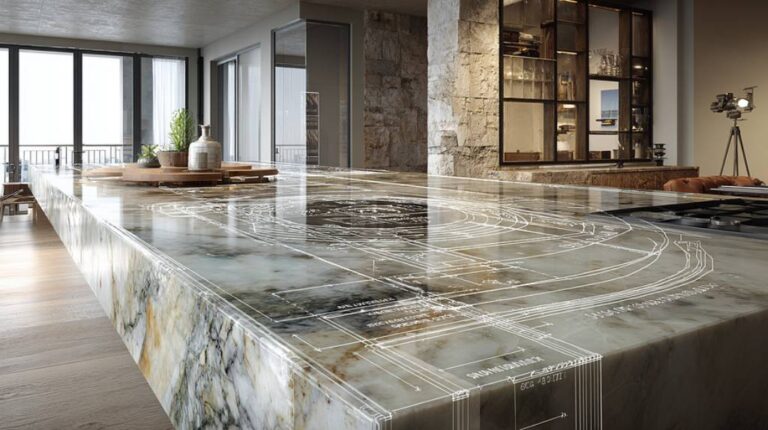


In high-end residential architecture, perfection is often assumed to be static. Surfaces are expected to remain seamless, joints invisible, lines uninterrupted. Yet buildings are not static objects. They expand, contract, settle, and deflect continuously. The most refined homes are not those that resist movement, but those that anticipate it.
Surface cracks are rarely random. They are evidence of forces that were not accounted for. Thermal movement, slab deflection, settlement, and structural load shifts are not construction anomalies. They are natural behaviours of built form. When finishes are selected without acknowledging this reality, the result is not imperfection in material. It is misalignment in design logic.
Temperature is one of the most consistent forces acting on a structure. Concrete expands in heat and contracts in cooler conditions. Exterior slabs experience daily and seasonal temperature fluctuations that create subtle but constant dimensional change. Even interiors are affected, particularly in homes with large glazing spans or underfloor heating systems. These movements may be measured in millimetres, but rigid surface materials do not absorb millimetres casually.
Slab deflection introduces another layer of complexity. As loads are applied over time, furniture placement, occupancy, accumulated structural weight, concrete experiences micro-bending. This deflection may be within structural safety limits, yet finishes installed above must accommodate that shift. If the surface layer is rigid and movement allowances are not engineered, stress concentrates at weak points. Cracks form not because the material is flawed, but because it has been restrained against natural movement.
Settlement is equally misunderstood. Soil consolidation and structural adjustment occur gradually in the early life of a building. Even with proper geotechnical design, minor shifts are inevitable. When surface systems are detailed without flexibility, settlement forces translate directly into visible fractures. A hairline crack across a polished floor is not simply an aesthetic failure; it is structural movement expressed at the surface.
This is why control joints are not aesthetic compromises but engineering tools. They provide planned points of relief where movement can occur intentionally rather than unpredictably. In many luxury homes, however, there is resistance to visible joints. The desire for uninterrupted surfaces often overrides structural logic. Yet eliminating a control joint does not eliminate movement. It merely relocates the stress to a less convenient location.
Rigid materials demand foresight. The more precise and monolithic the surface, the more essential expansion planning becomes. Large-format stone, continuous slabs, and tightly aligned installations magnify the effects of movement. These materials do not flex to absorb structural behaviour. They reveal it.
Designing for expansion is therefore not a technical afterthought; it is a philosophical shift. It requires accepting that buildings are dynamic systems. It means specifying movement joints aligned with geometry rather than hiding them as corrections. It demands coordination between structural engineers, architects, and installation teams long before finishes arrive on site.
True refinement lies in predicting behaviour over decades, not in achieving visual perfection on completion day. When thermal movement is calculated, when slab deflection is anticipated, when settlement is acknowledged, and when control joints are integrated with intention, surfaces remain stable and dignified.
The illusion of perfection often ignores physics. Enduring luxury respects it.
In architecture at the highest level, success is not measured by the absence of joints or the invisibility of seams. It is measured by how intelligently movement has been designed into the system. Because materials do not fail on their own. They fail when natural forces are denied space to exist.
Design for expansion, and surfaces endure. Design for perfection alone, and cracks will eventually decide the conversation.